
Tell us about the job
Takes about a minute. No obligation.
Sizing a furnace for Hot Springs County starts with understanding what the burner and heat exchanger are actually being asked to carry each year. Homes in Hot Springs County, WY run heat about ten months a year, from September through June. A unit that leaves the install undersized cycles harder and longer to hold temperature, and the ignition system and heat exchanger accumulate wear that a correctly sized unit would not. A contractor doing the load calculation here has to account for that sustained demand before committing to equipment selection, because the install decision sets what the system endures from the first heating season forward.
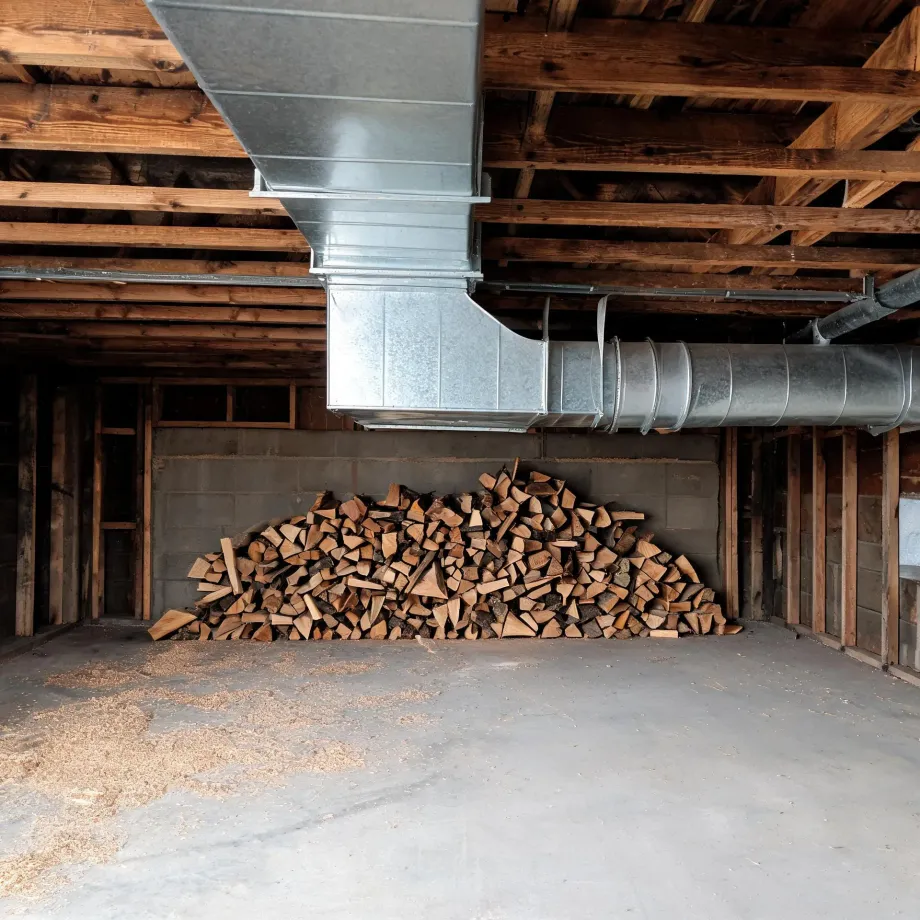
Ductwork laid down for an older generation of equipment does not automatically carry what a new furnace needs to move through it. A contractor pricing a furnace installation here has to pull registers, check trunk dimensions, and confirm that the existing runs will handle the airflow a modern unit delivers before the equipment itself is even on order. Half the homes in Hot Springs County, Wyoming were built in 1974 or earlier (2020-2024 ACS 5-year). That history shapes the distribution: a substantial share of the county's housing has ductwork that was sized around systems no longer made, which means the first question on any installation quote is whether the delivery system stays or gets rebuilt.
What a New Furnace Installation Puts in Your Home
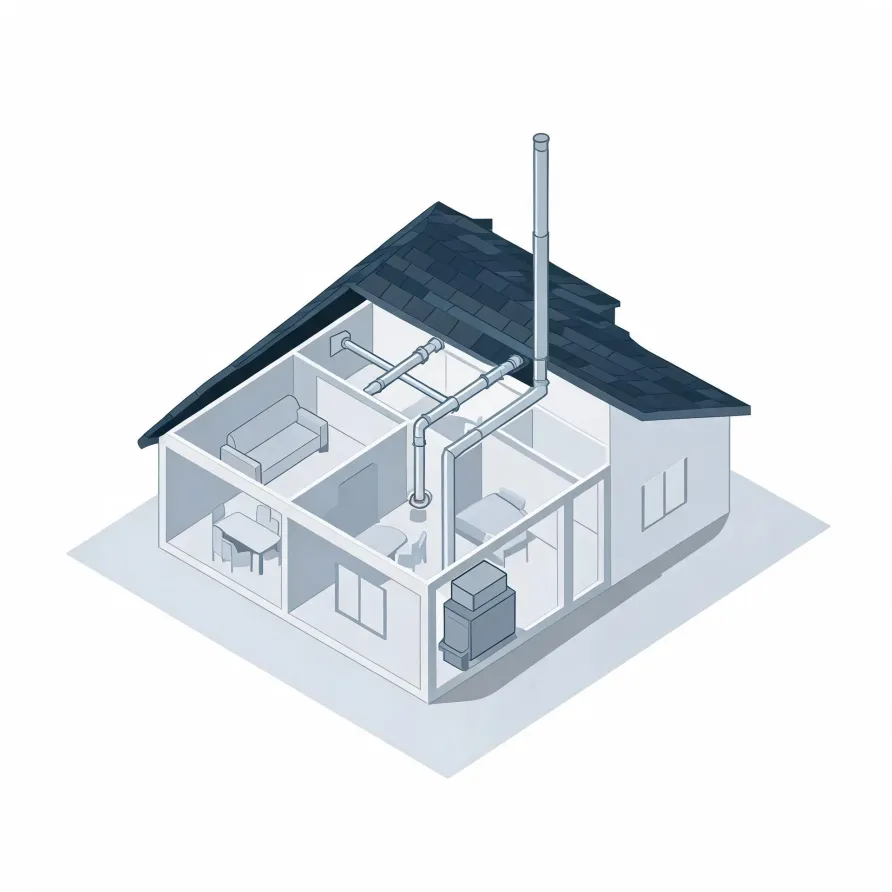
The furnace itself sits in a utility space, basement, or dedicated closet and is the unit that produces heat. A heat exchanger inside it warms the air that moves through your home, and a blower motor pushes that air out. The flue pipe exits through a wall or roof and carries combustion gases outside.
The thermostat mounts on a main living-area wall and is what you touch to set and read the temperature in your home. Alongside the furnace, a contractor fits a filter housing where the return air enters the unit, and a plenum that connects the furnace to your supply and return duct runs.
The drawing shows a typical layout, and a licensed contractor determines exactly which components apply to your house and how they are configured.
Find a contractor in Hot Springs CountyHot Springs County, Wyoming, by the numbers
149 severe weather events were recorded in Hot Springs County, Wyoming between 2015 and 2024.
NOAA National Centers for Environmental Information, Storm Events Database, bulk CSV export, events 2015-01-01 through 2024-12-31.Half the homes in Hot Springs County, Wyoming were built in 1974 or earlier (2020-2024 ACS 5-year).
U.S. Census Bureau, 2020-2024 American Community Survey 5-Year EstimatesHot Springs County, Wyoming holds 2,461 housing units (2020-2024 ACS 5-year).
U.S. Census Bureau, 2020-2024 American Community Survey 5-Year EstimatesOwners occupy 72.7% of the occupied homes in Hot Springs County, Wyoming (2020-2024 ACS 5-year).
U.S. Census Bureau, 2020-2024 American Community Survey 5-Year EstimatesFurnace Installation Rules on the Books for Hot Springs County, Wyoming4 sourced standards and codes
What Furnace Installation Looks Like in Hot Springs County
Non-weatherized gas furnaces manufactured on or after November 19, 2015 must reach 80.0 percent AFUE.
Non-weatherized oil-fired furnaces manufactured on or after November 19, 2015 must reach 83.0 percent AFUE.
Mobile home gas furnaces manufactured on or after November 19, 2015 must reach 80.0 percent AFUE.
Non-weatherized gas furnaces manufactured on or after December 18, 2028 must reach 95.0 percent AFUE, up from the 80.0 percent minimum that applies to units manufactured before that date.
Severe Weather Events in Hot Springs County
Weather in Hot Springs County puts a measurable load on heating equipment, and that load shapes what a furnace needs to handle over its working life. Sizing and installation decisions that ignore local conditions leave homeowners with equipment that was never built for the place it serves.
149 severe weather events, 2015–2024. Source: NOAA National Centers for Environmental Information, Storm Events Database.