Tell us about the job
Takes about a minute. No obligation.
Homes in Teton County, WY run heat in every month of the year. The burner and ignition system in a furnace here never get a long rest to hide a developing fault. A contractor looking at a repair starts with the ignition components and heat exchanger, because those are the parts that have been cycling without extended pause. Cracks in a heat exchanger and igniter degradation both progress quietly under that kind of load, and a quote that skips past them is likely to miss the actual failure point.
Furnace stock in this county carries a repair history that shows up the moment the cabinet comes off. Half the homes in Teton County, Wyoming were built in 1989 or earlier (2020-2024 ACS 5-year). A heat exchanger or control board in a house that old was spec'd for a system long since discontinued, and when a contractor opens the unit, the question of whether replacement parts are still manufactured becomes as consequential as the failure itself. Distributors carry current lines; they do not warehouse components for every system this housing stock has cycled through, and a repair that looks like a straightforward swap can stall on availability before price is even discussed.
The Parts of a Furnace a Contractor Checks First
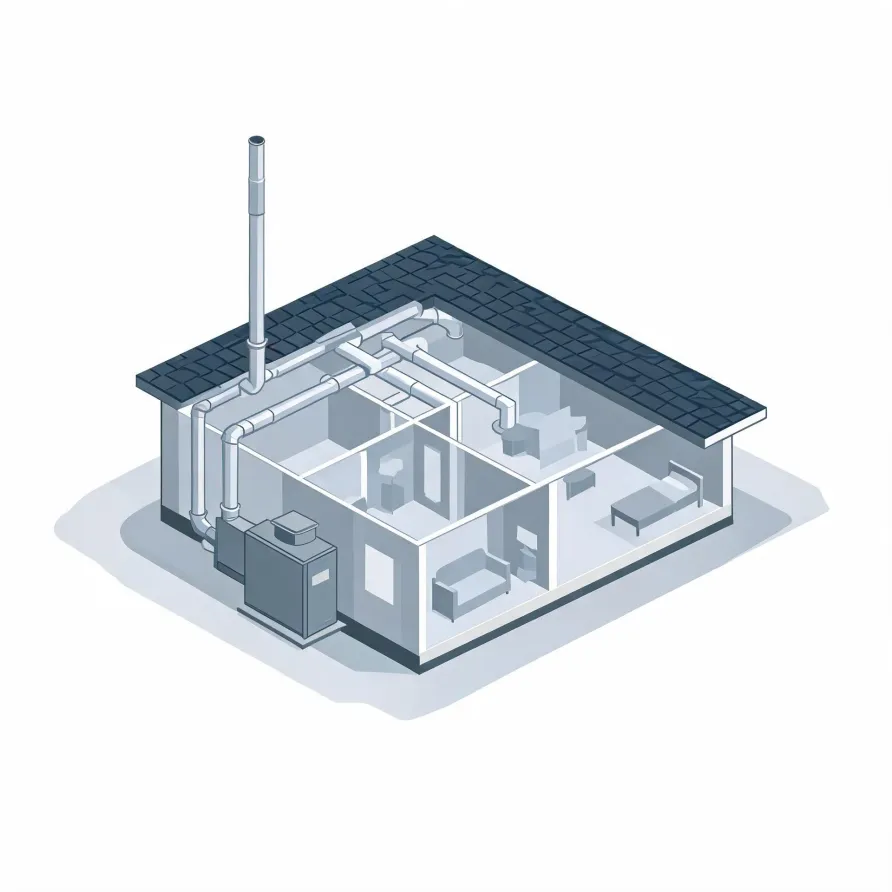
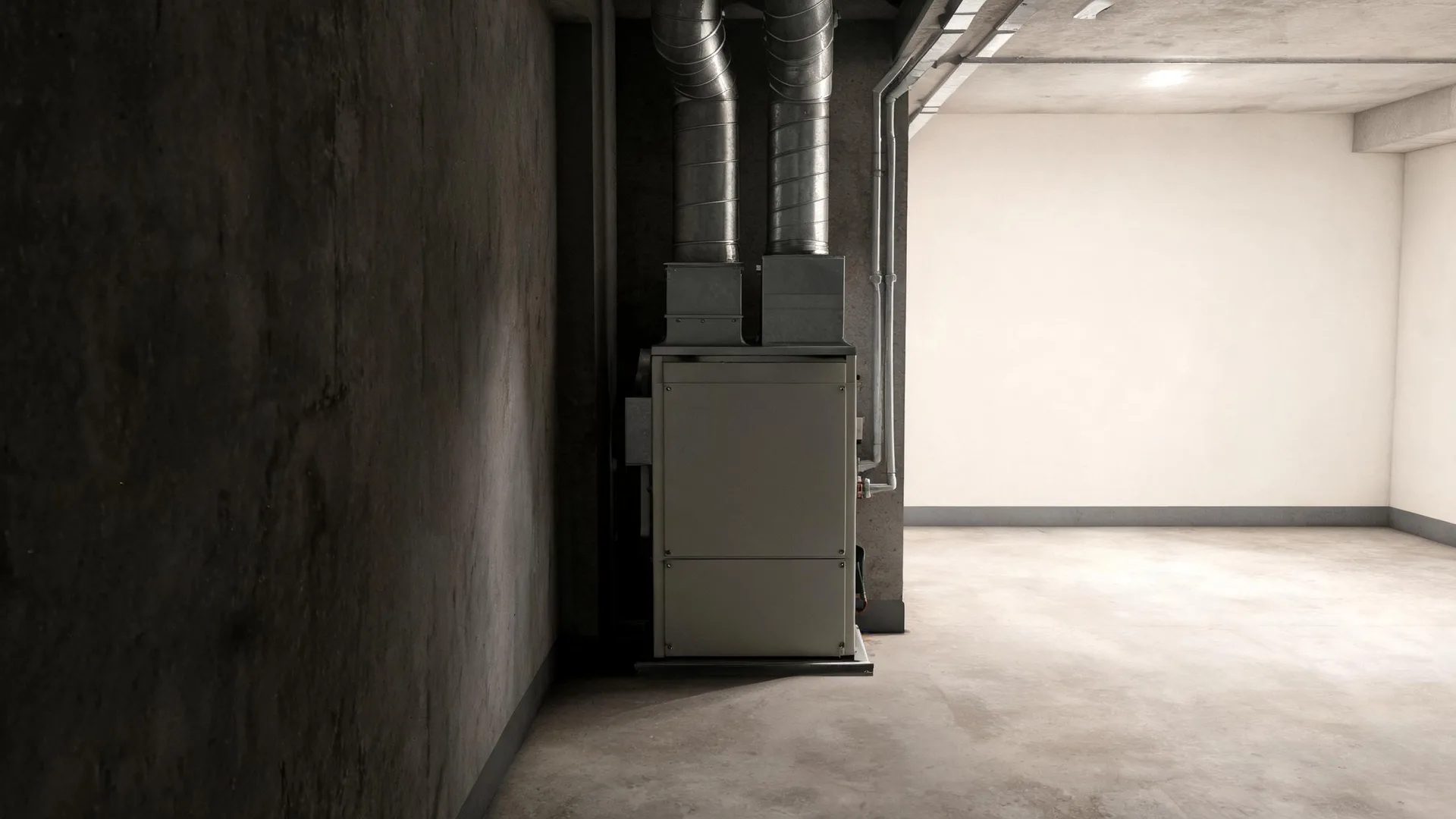
The furnace itself sits in a utility space, basement, or closet and is the heart of the system. Inside it, the heat exchanger is what a contractor goes to early when something is wrong: cracks or corrosion there let combustion gases into the air supply. The burners, igniter, and flame sensor all live inside that cabinet too, and any one of them can be the reason the furnace fails to fire or shuts off mid-cycle.
The blower motor sits at the base of the furnace cabinet and pushes conditioned air out through the supply side of the house. The flue pipe runs from the top of the furnace to an outside wall or roof and carries exhaust gases out. The filter housing sits where return air enters the cabinet, and a clogged filter puts strain on the blower and restricts the whole system.
The drawing shows a typical furnace layout, and a licensed contractor determines which components apply to the specific equipment and installation in your home.
Find a contractor in Teton CountyTeton County, Wyoming, by the numbers
231 severe weather events were recorded in Teton County, Wyoming between 2015 and 2024.
NOAA National Centers for Environmental Information, Storm Events Database, bulk CSV export, events 2015-01-01 through 2024-12-31.Half the homes in Teton County, Wyoming were built in 1989 or earlier (2020-2024 ACS 5-year).
U.S. Census Bureau, 2020-2024 American Community Survey 5-Year EstimatesTeton County, Wyoming holds 13,658 housing units (2020-2024 ACS 5-year).
U.S. Census Bureau, 2020-2024 American Community Survey 5-Year EstimatesOwners occupy 58.3% of the occupied homes in Teton County, Wyoming (2020-2024 ACS 5-year).
U.S. Census Bureau, 2020-2024 American Community Survey 5-Year EstimatesCodes & Standards Governing Furnace Repair in Teton County, Wyoming4 rules & standards
What HVAC Repair Looks Like in Teton County
Non-weatherized gas furnaces manufactured on or after November 19, 2015 must reach 80.0 percent AFUE.
Non-weatherized oil-fired furnaces manufactured on or after November 19, 2015 must reach 83.0 percent AFUE.
Mobile home gas furnaces manufactured on or after November 19, 2015 must reach 80.0 percent AFUE.
Non-weatherized gas furnaces manufactured on or after December 18, 2028 must reach 95.0 percent AFUE, up from the 80.0 percent minimum that applies to units manufactured before that date.
Severe Weather Events in Teton County
Teton County's climate puts real stress on furnace components, and that stress compounds over time. How often the weather turns extreme is a local fact, and it shapes how hard heating equipment works and how soon repair needs show up.
231 severe weather events, 2015–2024. Source: NOAA National Centers for Environmental Information, Storm Events Database.