






Is a high-efficiency gas furnace worth it in Wyoming

Send the form and the search for an installer is over.

Hand it off

Is a high-efficiency gas furnace worth it in Wyoming

Wyoming winters put a furnace to work for months straight, and you're looking at the cost of a high-efficiency model against a standard one before you commit. With power cheap here and gas the fuel most homes already run on, it's fair to wonder whether the higher-efficiency unit actually earns back what it costs, or whether a standard 80 percent furnace does the job just as well for less upfront.

Yes, for most homes here, because of how long and how hard the furnace runs

A high-efficiency furnace, rated 95 percent or higher, burns less gas to make the same heat as a standard 80 percent model. In Wyoming, where the furnace runs from October through April and sometimes into May, that difference shows up on the gas bill every one of those months. Standard furnaces vent through a metal flue and lose a good share of heat straight up it. High-efficiency models use a sealed PVC vent and a second heat exchanger to pull more heat out of the exhaust before it leaves the house. The higher price buys a furnace that keeps working at that rate every winter you own it, not just the first one. For a house that heats with gas most of the year, the gap between 80 percent and 95 percent efficiency adds up to real gas saved over a long heating season.

A man in a blue sweatshirt reclines with closed eyes in a brown leather armchair in a living room with a bookshelf, houseplant, sofa, window, and a side table holding newspapers and a dark mug.
A bearded man in a gray pullover reclines with closed eyes on a brown leather sofa in a sunlit room with a window, framed picture, potted plant, and a wooden cabinet holding papers and a dark mug.
A man in a gray sweater leans back with closed eyes in a brown leather armchair beside a wooden side table holding a dark mug and a folded newspaper, with bookshelves and a window seat behind him.
A man in a green sweater reclines in an armchair with his eyes closed and a slight smile, beside a window with plants, a small table holding a mug and folded newspaper, and bookshelves behind him.

A standard furnace burns gas, pulls heat off the exhaust once, and sends the rest up a metal flue while it's still hot enough to rise on its own. A high-efficiency furnace doesn't let go of the exhaust that easily. It runs it through a second heat exchanger and pulls out more of the heat before the gas is done venting. By the time that exhaust leaves the furnace, it's cool enough to condense into water, which is why these units drain through a PVC pipe rather than a metal one. That same cool exhaust means the furnace doesn't need the pull of a hot flue to vent. It runs out through PVC pipe on the sidewall instead of up through the roof. The blower is different too. Instead of a single-speed motor switching on and off, a variable-speed motor adjusts itself to hold a steadier temperature through the house. In a Wyoming winter, that's the furnace running longer stretches at lower output instead of blasting on and off.

How a High-Efficiency Furnace Works

  • A standard furnace vents through a metal flue because its exhaust stays hot enough to rise on its own.
  • A high-efficiency furnace cools the exhaust so far that a second heat exchanger pulls out more of the heat before the gas burns off.
  • That cooled exhaust condenses into water, so the furnace drains it through a PVC pipe instead of a metal flue.
  • Because the exhaust is cool, it vents through PVC pipe out a sidewall instead of up through the roof.
  • A standard furnace has one heat exchanger; a high-efficiency model runs the exhaust through a second one to wring out more heat.
  • The blower on a high-efficiency furnace runs on a variable-speed motor, so it can hold a steadier temperature than a single-speed blower cycling on and off.
A gray furnace cabinet in a basement, connected to galvanized sheet-metal ductwork and white PVC pipes, against a concrete wall with exposed metal piping and insulation overhead.
Before you get your furnace installation
A gray high-efficiency furnace with two PVC vent pipes stands in an unfinished basement beside sheet-metal ductwork, a framed and plastic-covered wall, and a bare concrete wall with vertical pipes.
After you get your furnace installation

What a long winter costs you

A furnace here can run from October into April, and some years longer. That's six or seven months where it's cycling on and off most days, not a handful of cold snaps. The gap between a standard furnace and a high-efficiency one shows up in how much gas gets burned over that stretch, not in any one month. A furnace that only ran eight or ten weeks a year would make the math a lot less interesting. Yours doesn't work that way.


Where cheap power changes the math

Some of the appeal of a high-efficiency furnace is the blower and controls drawing less electricity, since the inducer motor and ignition system run longer on a two-stage or modulating unit. Where power costs more, that difference matters on its own. Here it doesn't carry much weight, because electricity is already cheap. The case for going high-efficiency in Wyoming rests almost entirely on the gas it saves over a long heating stretch, not on what it does to the electric side of the bill.

An older man with gray hair and a beard leans back on a beige sofa with his eyes closed, in a sunlit room with potted plants, a wicker chair and large windows behind him.
A woman in a cream knit sweater sits in an armchair with her eyes closed and a slight smile, beside an open window showing orange autumn foliage, with a mug, books and a lit candle on a small side table.

Done looking for a furnace pro

One installer gets your project, so there's no bidding war over it.

Asking costs nothing, and the choice to hire stays yours.

What you'd notice by February

A standard furnace works harder on the coldest nights to hold your house at temperature, and you can feel that in rooms farther from the furnace running a few degrees cooler. A high-efficiency furnace pulls more heat out of the same gas, so it holds steadier and the far rooms don't lag as much. With a Wyoming winter running six or seven months, that's not one cold snap you're noticing, it's most of the season. The difference shows up less as a single dramatic moment and more as a house that just keeps up better, week after week, until spring.

What's at risk going in

A high-efficiency furnace vents through PVC pipe instead of a metal flue, because the exhaust comes out cool enough not to need one. That pipe has to run somewhere, usually out a sidewall, and whoever installs it needs to route it correctly and size the intake and exhaust to the unit. Get that wrong and you can end up with condensation problems in the lines or a furnace that short cycles. This is a job for someone who installs these furnaces in Wyoming regularly and knows how the venting has to be set up here, not a generic swap of one furnace for another.

Winter nights average 13°F statewide

At 13°F, your furnace isn't cycling, it's running close to flat out most of the night. That's the stretch where a high-efficiency model's second heat exchanger earns its keep, pulling more heat from the same flame instead of sending it out the flue.

NOAA nClimDiv 1991-2020 county normals weighted by homes

A gray furnace cabinet in a basement with sheet-metal ductwork, white PVC vent pipes, and black gas piping against a concrete wall and wood-framed partition on a bare concrete floor.

A standard furnace holding its own

This one vents straight through a metal flue, burning gas and sending the leftover heat up and out. It's doing its job here, no rust, no strain, just a furnace sized right for the duct work it's tied into.

A gray metal furnace with two white PVC vent pipes stands on a concrete floor beside galvanized sheet-metal ductwork in a basement or utility space with wood framing.

A furnace running past its years

The rust on this cabinet and the PVC pipes running out to the wall tell you it's a high-efficiency unit nearing the end of what it's got. A furnace that looks like this is the one to replace before it fails on a January night.

Why does your furnace room feel this cold?

Stand near the furnace room in January and you'll notice the floor above it never quite warms up, even with the furnace running. You might hear it cycling on again just minutes after it shut off, especially overnight when it's below zero outside. Check the flue pipe where it exits the house. If it's warm to the touch, that's heat leaving with the exhaust instead of staying in your ductwork. Some homeowners notice a faint gas smell near the unit on the coldest nights, which is worth having looked at, since a furnace running flat out for hours at a stretch is a furnace with less room for error if something's already starting to wear.

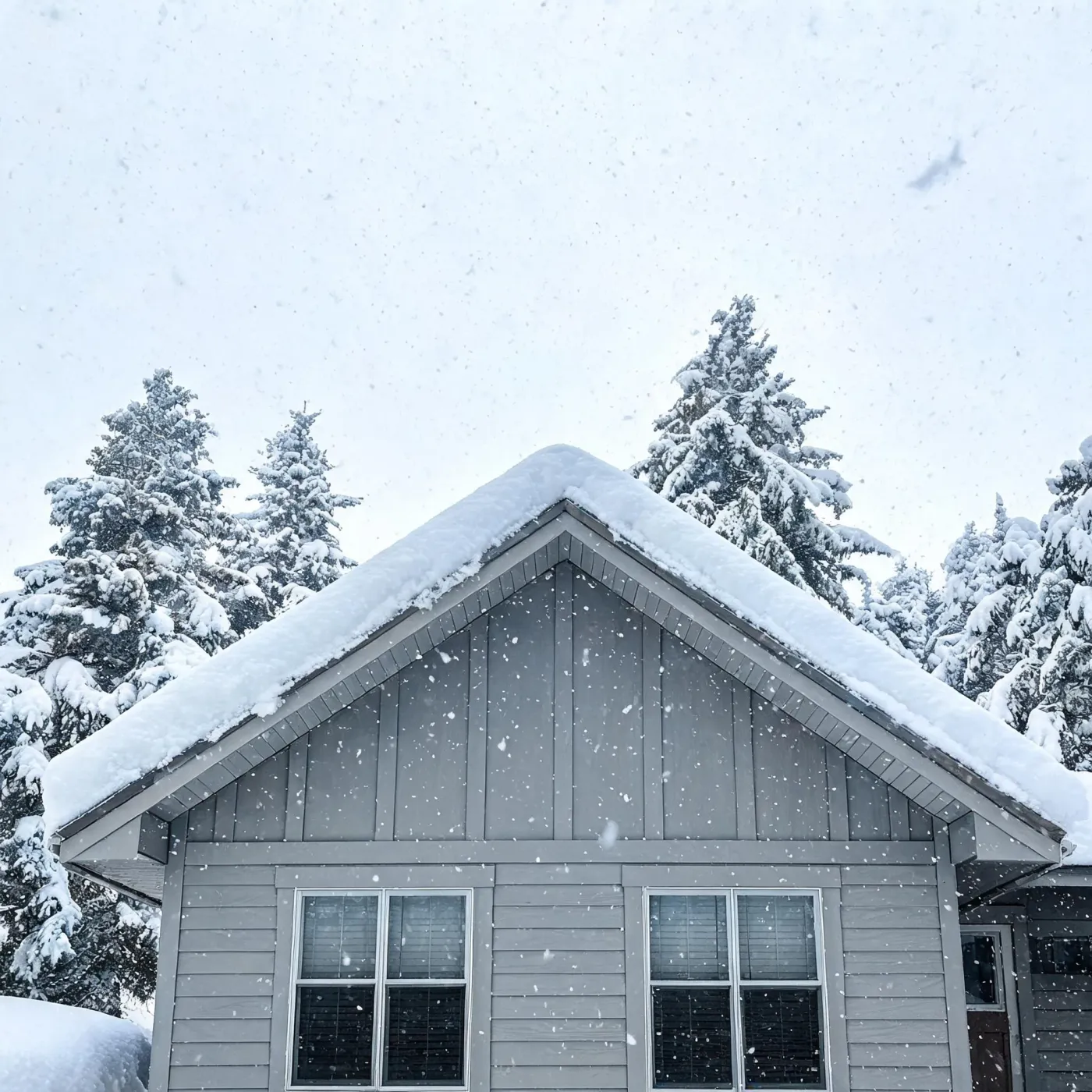
A gray-sided house with a steep gable roof covered in thick snow, framed by snow-laden conifers under a pale sky with falling snowflakes.

Winter nights statewide average 13°F, according to NOAA. At that temperature your furnace isn't shutting off between cycles, it's holding a long, steady burn to keep up with how fast the house loses heat. A standard furnace sends a good share of that burn straight out the flue as hot exhaust. A high-efficiency furnace pulls more of it back out before it leaves, so the same flame covers more of the house. You'd feel that difference most on the nights the thermometer actually hits 13, not the mild ones in between.

NOAA nClimDiv 1991-2020 county normals weighted by homes

A high-efficiency furnace earns its keep in a state where winter runs six or seven months and the gas keeps burning most nights to hold the house at temperature. A standard furnace will do the job too, it just sends more of that flame up the flue instead of into your rooms. Whichever way you decide, getting the installation right matters more than the brand on the cabinet, and that comes down to whoever's running the flue, sizing the unit, and setting it up to vent safely. A furnace installer who works winters in Wyoming has seen what fails here and what a venting job needs to hold up to 13°F nights. You'll be matched with one licensed contractor local to you, not a handful of companies competing for your callback, so the person who shows up already knows the kind of system your house needs and the conditions it has to run in.

At dusk, a dark board-and-batten house with a standing-seam metal roof and lit entry walkway of stone pavers, with two large outdoor heat pump units on a stone-walled pad at right and trees and hills in the background.

Furnace Installation

It's off your list after this

Step 1 of 3: Equipment
  • A brown leather and wood armchair with a cream knit throw sits in a corner beside a woven basket holding a dark cushion, under a framed mountain photograph, with a wood-trimmed window showing yellow and green foliage.
    • Get in touch with a local installer about a new furnace.
    • A local installer who puts in furnaces gets your project.
  • A dark wood dresser against a pale wall holds a ceramic vase of eucalyptus branches, a stack of books with a wooden bowl, and a woven basket, with a framed landscape painting above and a woven basket holding a knit blanket on the floor beside a window.
    • Once you send the form, finding a pro is off your list.
    • After you send the request, you're done searching.
  • A window seat with beige linen and brown textured cushions, a chunky knit blanket, and an open book, beside a window showing blurred yellow autumn foliage.
    • Skip collecting and comparing quotes for the new furnace.
    • Skip the round of in-home estimates for a new furnace.
  • A cream upholstered armchair with a rust-colored pillow and knit fringed throw sits beside a window with a ceramic vase of orange-leafed branches on the sill, overlooking autumn trees and leaf-covered ground.
    • Only one pro gets your request, so you hear from one company.
    • Your request stays with one local pro.