

Signs of a cracked heat exchanger in Wyoming

Once you send the form, finding a pro is off your list.

I'm done searching

A cracked heat exchanger shows up as a strange smell when the furnace runs, soot around the burner, a furnace flame that flickers or leans instead of burning steady, or a headache and nausea that only hit when you're home with the heat on. The crack forms over years as the metal heats and cools every cycle, all winter, and eventually it gives. Your carbon monoxide detector going off while the furnace is running is the clearest sign there is, and it means shut the furnace off and get air moving through the house. With gas heat common in Wyoming homes, this is worth taking seriously rather than waiting on. A cracked heat exchanger lets exhaust mix with the air your furnace blows into the house, and that exhaust carries carbon monoxide. It isn't something to patch around. The exchanger has to be inspected and, if it's cracked, replaced before the furnace runs again.

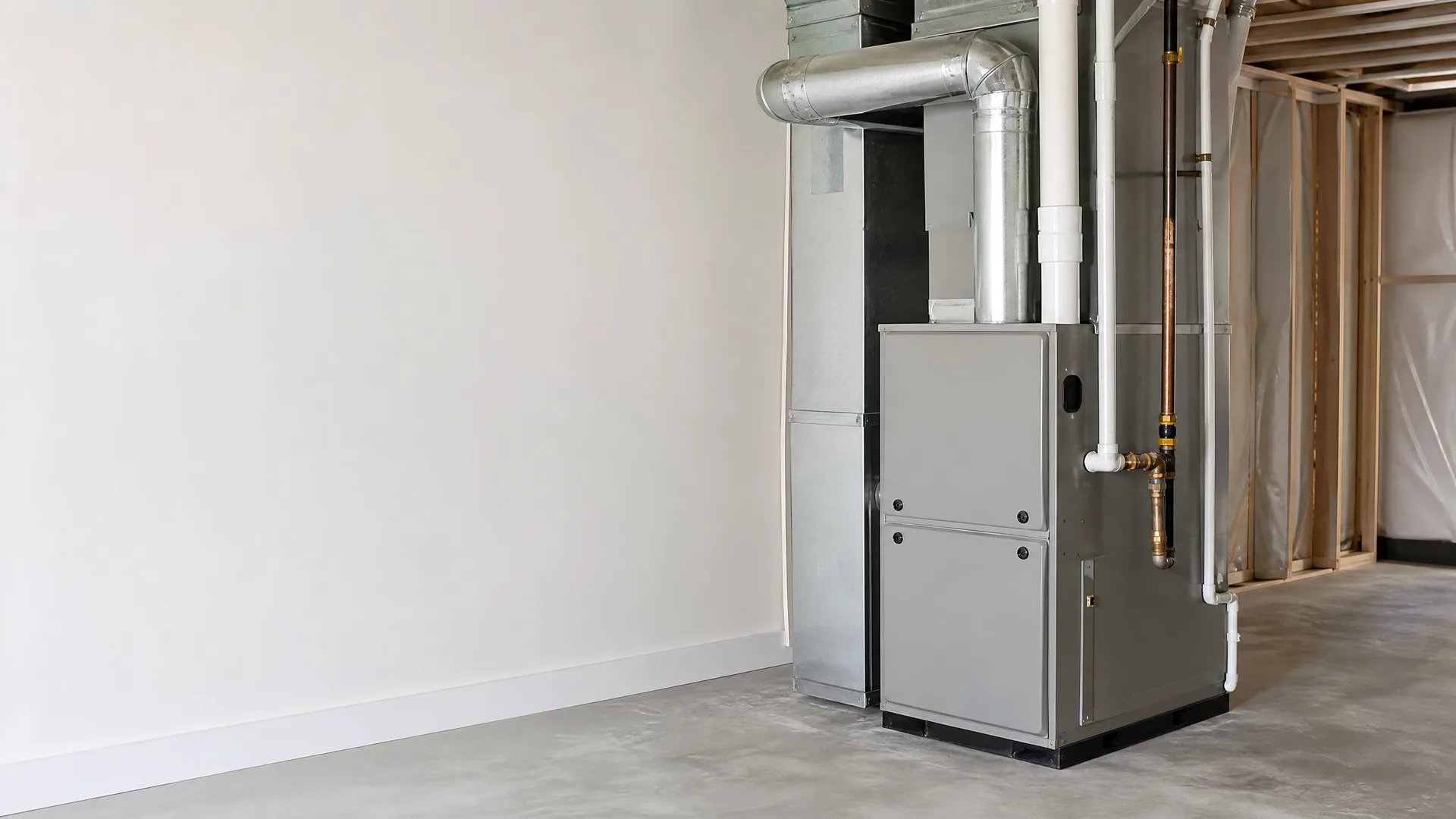
A gray high-efficiency furnace with white PVC vent pipes stands against a concrete basement wall beside sheet-metal ductwork, a small condensate pump on the floor, and exposed wood framing at left.

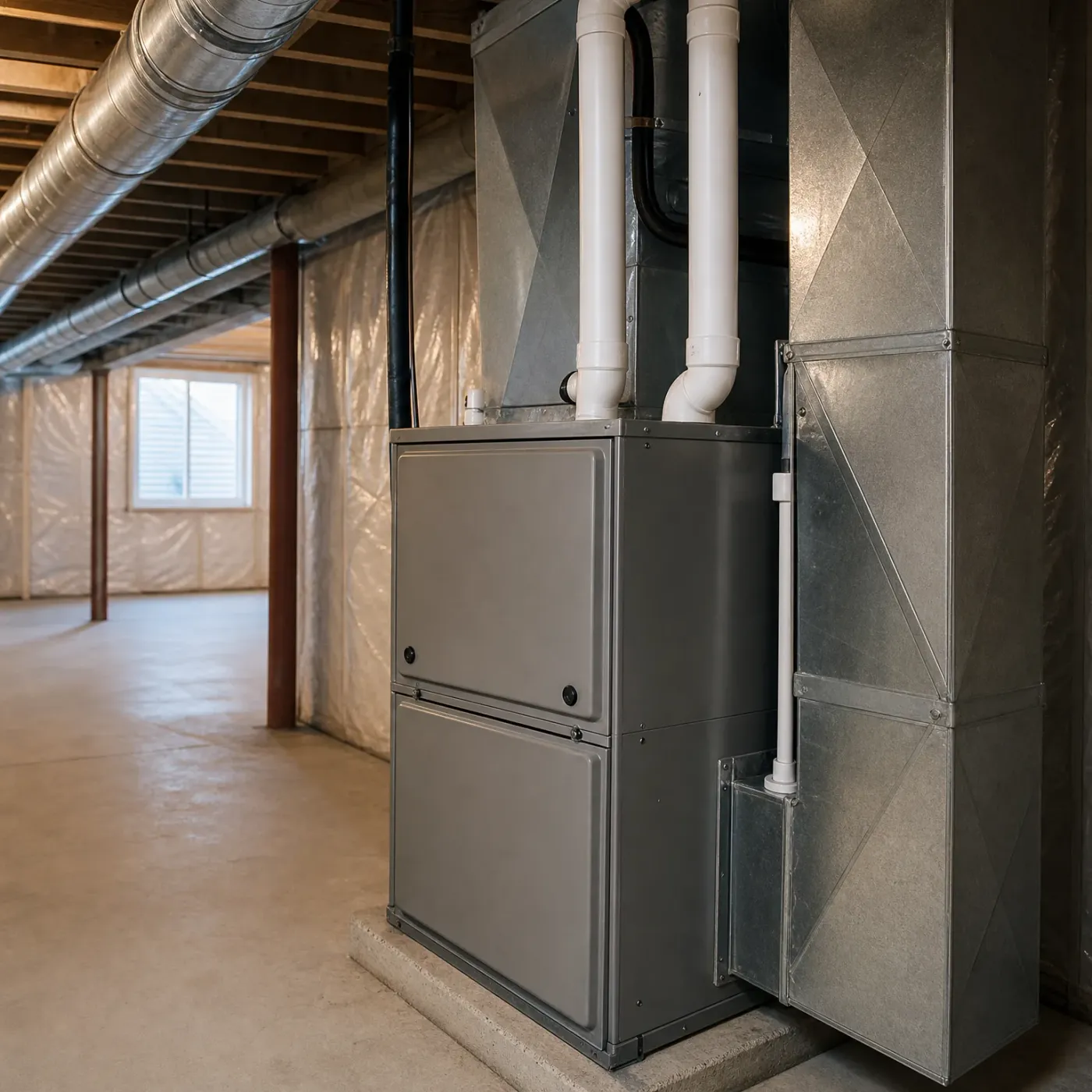
Furnace running clean

A furnace that's venting properly burns with a steady blue flame and keeps the flue pipe doing its job of carrying exhaust straight outside. No soot on the burner, no smell drifting into the house, no headaches that come and go with the heat. This is what you want to see when you check yours.

A gray sheet-metal furnace with flue pipe and adjacent ductwork stands against a stone basement wall on a concrete floor, with white PVC and metal pipes running nearby.

Furnace in trouble

An older furnace with a cracked heat exchanger can leak exhaust into the air it's supposed to heat instead of sending it outside through the flue. You might notice soot near the burner, a flame that flickers or pulls to one side, or a smell when the furnace kicks on. Any of these is reason to get it looked at before it runs again.

Wait It Out or Have It Checked

Keep running it

  • A cracked heat exchanger can let carbon monoxide mix with the air your furnace blows through the house, and that risk doesn't go away on its own.
  • The crack usually gets worse with each heating cycle as the metal keeps expanding and contracting against the same weak point.
  • You're relying on a carbon monoxide detector to catch what your nose and eyes might not, and that's a lot to ask of one device.
  • Soot, a flickering flame, or a smell near the furnace are signs the exchanger is already past the point of waiting it out.
  • Running a furnace with a cracked exchanger risks the rest of the unit too, since the blower and ducts keep moving whatever that crack lets through.

Get it looked at

  • A furnace technician can pressure test the exchanger or run a camera through it to confirm a crack that a smell or a flame alone can't prove.
  • Once it's found, a cracked exchanger gets the furnace shut down until it's fixed, so you're not guessing whether it's safe to turn the heat back on.
  • A technician can tell you whether the exchanger is repairable or whether the furnace itself needs replacing, which depends on the unit's age and condition.
  • Having someone confirm it settles the question, instead of you watching for headaches or checking the pilot light every time you walk by.
  • You stop having to search around for who handles this, call a few places, and explain the same symptoms over and over before anyone shows up.
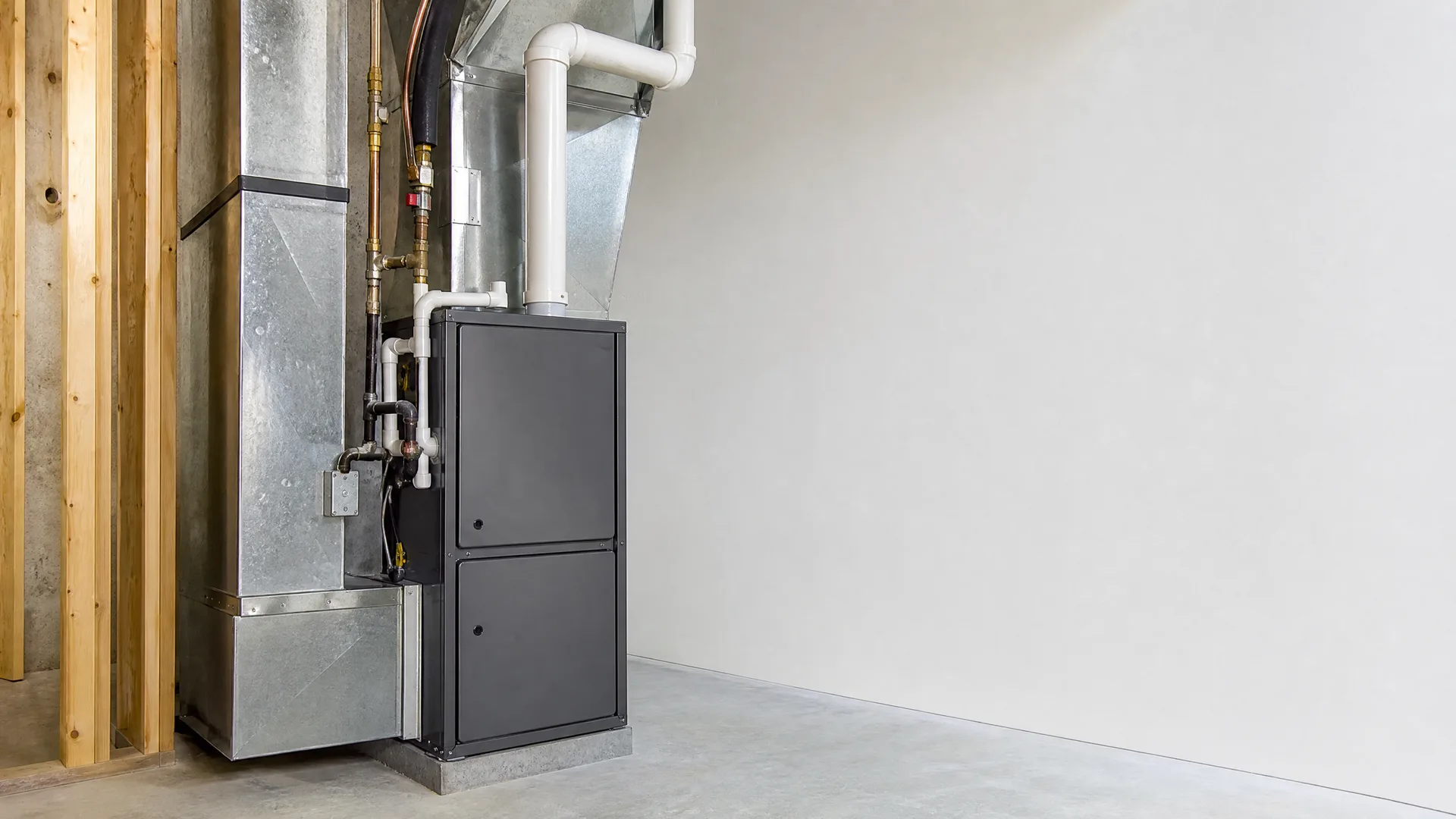
A dark gray furnace connected to galvanized sheet-metal ductwork, white PVC vent pipes and copper piping, standing against a plain light wall in a room with a bare concrete floor and exposed wood framing at left.

Why the metal cracks

The heat exchanger is the metal wall between the flame and the air your furnace blows into the house. Every time it fires, that metal heats up fast and cools down again once the thermostat is satisfied. Through a Wyoming winter that's thousands of cycles. The expanding and contracting eventually fatigues the metal at its weakest point, usually a seam or a bend, and that's where the crack starts.

A gray high-efficiency furnace with sheet-metal ductwork, white PVC vent pipes and copper piping stands against a wall in an unfinished basement with a concrete floor and insulated wood stud framing at right.

Why a gas furnace matters here

Most homes in Wyoming heat with gas, which means most furnaces here have a heat exchanger and a flue carrying exhaust outside. An electric furnace has no exchanger and no cracking risk like this. If your home runs on gas heat through the cold months, this is a part worth knowing about, since it's doing the same job in your system as it does in every gas furnace.

What would you actually notice in your house

Most of what gives it away is small, and easy to brush off at first. A smell like formaldehyde or something faintly metallic when the furnace kicks on, gone once it shuts off. A film of soot around the burner door when you pop the panel. The flame looking off, leaning to one side or flickering instead of sitting steady and blue. Maybe a headache that shows up after an hour home with the heat running and clears once you're outside or the furnace cycles off. None of these alone means the exchanger's cracked. Together, or more than once, they mean the furnace is running on borrowed time, and the air it's pushing through your house on a cold Wyoming night isn't just heat.

A smiling bearded man in a dark green hooded jacket and blue t-shirt sits on a couch in a living room with shelves, a potted plant, and a bowl of popcorn on a wooden table.
A smiling man in a green long-sleeved shirt sits on a beige sofa in a living room, with a bowl of popcorn in the foreground, a large potted plant and shelving behind him.
A smiling man in a dark blue T-shirt sits on a couch in a dimly lit living room with a bowl of popcorn and a remote on a wooden table, a lit floor lamp and bookshelves behind him, and windows showing greenery.
A smiling bearded man in a dark green long-sleeved shirt sits on a leather couch in a living room, with a bowl of popcorn and a remote control on a wooden table in the foreground.
A gray high-efficiency furnace on a concrete pad in an unfinished basement, with white PVC vent pipes, galvanized sheet-metal ductwork, insulated walls and a small window in the background.

Hand off the furnace problem

Explain the job once and skip repeating it on every call.

After you send the request, you're done searching.

Hand it over

No charge to send it. You decide if you hire them.

Can a cracked heat exchanger make a carbon monoxide detector go off?

You've got a carbon monoxide detector that went off, or came close to it, and the furnace was running at the time. You're trying to figure out if that's the heat exchanger talking, or something else in the house. A detector going off isn't something you want to wait out until morning, especially with the furnace running most nights now.

Yes, and it's not something to wait out

A cracked heat exchanger lets exhaust gas mix with the air your furnace pushes through the ducts, and carbon monoxide is part of that exhaust. If your detector sounds while the furnace is running, that's exactly the pattern a crack produces. It won't trip constantly. It depends on how far the crack has opened and how long the furnace has been running that cycle. Some homes get a detector going off once a week, others only when it's cold enough that the furnace runs long stretches. Either way, a detector going off with the furnace on is reason enough to shut the furnace down and get it looked at before running it again. Don't reset the alarm and move on.

A gray gas furnace stands on a concrete basement floor, connected to sheet-metal ductwork, white PVC vent pipes, and a yellow gas line, with plastic sheeting covering the walls.
A furnace like this one is doing its job: clean ductwork, tight gas lines, no rust or dust built up around the cabinet after years of use.
A metal furnace with louvered panels stands against a concrete basement wall, connected to sheet-metal ductwork and a round flue pipe, with wooden framing posts and a pipe nearby.
An older furnace like this, caked in dust with age showing on the cabinet, is the kind worth having a contractor check for a cracked exchanger.

Winter nights average 13°F statewide

At 13°F, your furnace is firing most of the night to keep up, cycle after cycle for months. That's a lot of heating and cooling on that metal wall inside it, and a crack already there gets worse with every one of those cycles.

NOAA nClimDiv 1991-2020 county normals weighted by homes

A closed silver laptop and a glazed ceramic mug on a wooden table, with a blurred kitchen counter, potted plant, cutting board and window in the background.

Where that leaves you

If you've noticed a smell when the furnace runs, soot on the burner, a flame that won't sit steady, or headaches that ease up once you leave the house, that's enough reason to have someone look at the heat exchanger. You don't need every sign on the list. One or two that keep showing up through a Wyoming winter is already worth acting on.

A furnace with a cracked heat exchanger doesn't fix itself, and it doesn't wait for a convenient week to get worse. Finding a licensed contractor, getting them on the phone, and going through what you've noticed one more time is its own kind of work on top of everything else you've got going in an evening. Send the form and that part is handled. Someone qualified gets in touch, and you're not the one making the calls.

A wooden table holding a stone vase with a bare branch, two stacked books and a small dark bowl, beside a window with green foliage outside and a sofa in the dim background.
A single-story stucco house at dusk with a lit paver walkway lined by low path lights, desert plants and boulders in front, and distant mountains under an orange and blue sky.

Furnace Repair

One request and it's handed off

Step 1 of 3: Equipment
  • A dimly lit living room corner with a beige upholstered sofa holding a dark green cushion and a chunky knit throw, beside a wooden sideboard with a lit ceramic table lamp, a small potted plant, and a wooden bowl, with a framed artwork on the wall and a mug on a book in the foreground.
    • Tell a local repair pro what your furnace is doing.
    • Describe your furnace job, and a local pro who handles it gets in touch.
  • A round wooden coffee table holding a round stone vase of green foliage, a lit candle in a glass container, and a small dark bowl, with a beige sofa, cushions and knit throw behind and a window at left.
    • Send the request and finding a pro stops being your problem.
    • After this form, you can stop searching for a furnace pro.
  • Sunlit living room with a wooden coffee table holding a ceramic vase of leafy branches and a carved wooden tray with two stacked books, in front of a beige sofa with tan and green cushions and a potted plant near a window.
    • One form replaces the calls you'd make to find a furnace pro.
    • Describe what your furnace is doing once, in one form.
  • Interior corner with a lit ceramic table lamp and wooden bowl on a wood sideboard, a framed picture and branch-filled vase behind, a knit throw over an upholstered chair, and a lit candle in a glass holder, stoneware mug and round planter of green foliage on a wooden table in the foreground.
    • Only one pro gets your request, so you hear from one company.
    • Your request stays with one local pro.