
Signs your furnace won't last a Wyoming winter
What are the signs my furnace won't make it through a Wyoming winter?
Wyoming winters don't give a furnace much room for error, and once temperatures drop below zero you need to know now whether yours can handle it, not find out the hard way at two in the morning. If it's been cycling strangely, running longer than it used to, or making a sound you haven't heard before, you're right to wonder if it's got one more winter left in it.
A furnace that short cycles, runs constantly, or smells like gas when it starts won't hold up
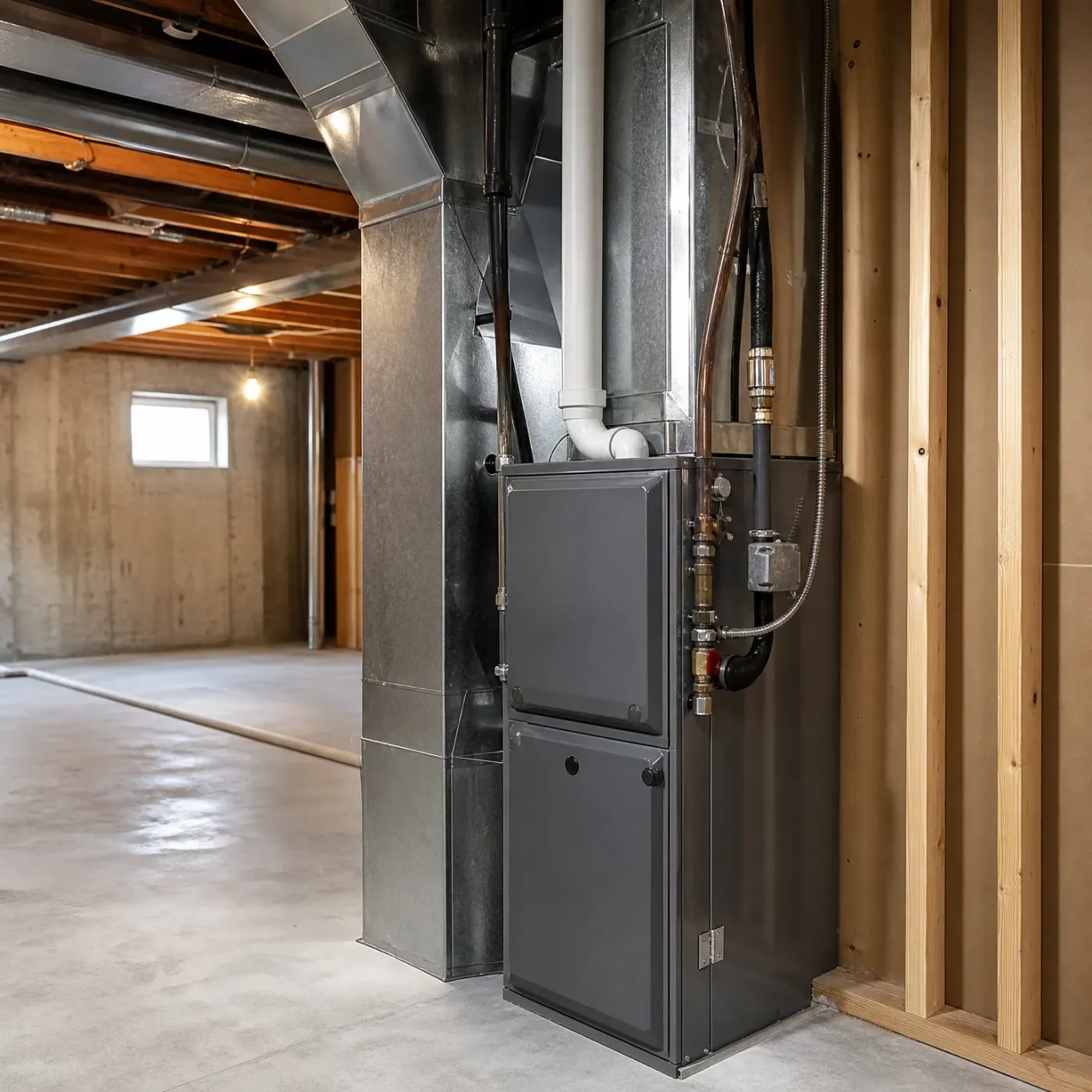
A furnace that can't make it through winter here usually tells you first through how it runs, not whether it runs at all. Short cycling, where it fires up, shuts off, and fires up again within a few minutes, means the heat exchanger or the ignition system is struggling to keep up. A furnace that runs nearly nonstop once it gets below zero outside is losing the fight against the cold rather than keeping ahead of it. A burner flame that's yellow instead of blue, or any gas smell when it kicks on, means stop using it and get it looked at. Rooms that stay cold no matter how long it runs mean it's no longer sized for what a Wyoming cold snap asks of it.

Short cycling in deep cold
A furnace that fires up, runs a few minutes, then shuts off before the house warms is struggling to keep its heat exchanger at a safe temperature. In mild weather you might not notice. Once it's holding below zero outside, short cycling gets worse and faster, because the furnace is working harder to recover heat it keeps losing. That pattern is a cracked heat exchanger or a failing limit switch, and either one needs a look before the cold sets in for good.

Yellow flame instead of blue
A gas furnace burner should show a steady blue flame. If it's turned yellow or orange, the gas isn't burning clean, and that points to a dirty burner or a combustion problem that also raises carbon monoxide output. This matters more in January than in October, because a furnace running nonstop in sustained cold has far less tolerance for incomplete combustion than one cycling on and off a few times a day.

What a failed furnace means in January
If your furnace quits on a night when it's below zero outside, you're not waiting until morning to deal with it. Pipes can freeze fast in a Wyoming house once the heat stops, and a cracked line is a bigger repair than the furnace itself. That's the real cost of ignoring a warning sign: not just a cold house, but a frozen one.
You also don't have time, on that night, to start calling around. Checking who's licensed, who answers after hours, who actually works on your brand of furnace, explaining the short cycling or the smell of gas to three different dispatchers before someone can come out. Getting matched with a contractor who already knows the situation and can reach out to you directly cuts that out, before the cold makes the decision for you.

Burner ignites and heat exchanger starts absorbing that heat.
Blower pushes warm air through the ducts into each room.
Limit switch checks the exchanger isn't overheating as it runs.
Worn exchanger metal can't hold heat evenly anymore, so it cracks.




Matched to your furnace job
Describe your furnace job once, to one pro.
A local pro who knows furnaces gets your details and gets in touch.
No charge to send it. You decide if you hire them.




What's actually running when it's cold
- The igniter glows or sparks to start the burner, and a cracked or weak one can fail only in deep cold.
- A flame sensor reads the burner's fire within seconds and shuts gas off if it doesn't detect it correctly.
- The inducer motor has to clear exhaust before gas is allowed to flow, so a slow or noisy one delays startup.
- A draft that's weak or blocked can trip the pressure switch, and the furnace won't fire until it clears.
- Furnaces built to run long, steady cycles in subzero weather lean harder on every one of these parts than they do in October.
- A part that's marginal in October can fail outright once it has to run for hours without a break in January.
A furnace starting up in January goes through the same steps it does in October, but with less margin for anything to go wrong. The igniter has to glow hot enough or spark reliably enough to light the burner, and age or a small crack shows up more in deep cold than in mild weather. Once the burner's lit, a flame sensor checks for it within seconds. If it doesn't read the flame cleanly, it cuts the gas rather than risk it, and a dirty or worn sensor can misread that signal on the coldest nights even if it's worked fine all fall. Before any of that, the inducer motor has to clear exhaust out of the heat exchanger, and gas won't flow until a pressure switch confirms the draft is there. If the inducer's slow, loud, or struggling, or if venting is partly blocked by ice or debris, that switch won't trip, and the furnace sits there instead of firing. None of these parts are new ideas. They're in every gas furnace. What changes in a Wyoming winter is how long and how often they're asked to work. A furnace that cycles on for ten minutes at a time in fall might run for hours straight once it's holding a house against zero degrees outside, and a part that was limping along in October doesn't get a break long enough to recover. That's usually when something marginal stops being marginal and starts being a furnace that won't start at all.
Winter nights average 13°F statewide
That's the average night, not the cold snap. When a hard freeze pushes well below zero, a furnace that's already struggling has no margin left, and that's usually the stretch that finds the weak part.
NOAA nClimDiv 1991-2020 county normals weighted by homes
A furnace that short cycles, struggles to ignite, or runs longer than it used to isn't going to get better when a hard freeze hits. Those signs tell you where the weak part is before the cold finds it for you. Waiting it out means betting a below-zero night in Wyoming against a furnace that's already shown you its trouble spot. You could spend an evening searching for a contractor, calling a few, explaining the short cycling or the slow start to each one, then sitting with quotes trying to tell them apart. Or you could skip that and get matched with a contractor who knows Wyoming furnaces and already has what you've described, and let them call you. Either way, the furnace itself still needs a straight answer, not a guess. The point of catching these signs now is that you get to deal with them on a Tuesday afternoon instead of a Thursday night at two below zero, with the furnace quiet and the pipes starting to feel it.





A furnace pro near you
Fill out one short form instead of calling around.
There's no charge for the request.