A gray high-efficiency furnace with two white PVC vent pipes stands beside galvanized sheet-metal ductwork in a dim basement with exposed joists and a concrete floor.

Get the right pro for your furnace

When a furnace flame sensor needs cleaning in Wyoming

A dirty flame sensor makes a gas furnace shut off soon after it starts, or stop lighting at all. Your furnace is doing most of its work right now, through a Wyoming winter, so a few minutes of buildup on that rod matters. Below is how to tell it needs cleaning and what that involves. If you'd rather hand it off, you can get matched with a contractor who'll reach out to look at it.

Find a pro near me

A flame sensor needs cleaning once a season, usually before the furnace starts running hard, and again partway through winter if the furnace is cycling more than it should. The rod sits in the burner flame and reads it to confirm the gas is actually lit. Soot builds up on that rod over weeks of normal use, a thin layer that does not look like much but is enough to block the signal. Once it can't read the flame, the furnace shuts the gas off as a safety measure, sometimes seconds after ignition, sometimes after it has run for a while and then cuts out. If your furnace lights, runs briefly, and then stops, or won't stay lit through a cycle, that buildup is likely why. In a Wyoming winter, with the furnace carrying most of the heating load for months, a sensor that needs cleaning shows up fast as repeated short cycles rather than steady heat.

A beige high-efficiency furnace stands on a concrete basement floor beside sheet-metal ductwork, with white PVC vent pipes and a gas line running along an insulated wood-framed wall.

Clean sensor, steady heat

This is what a furnace looks like when the flame sensor is doing its job. The burners light, the rod reads the flame, and the furnace keeps running without a hitch. No short cycling, no lockouts, just steady heat moving through the ducts on a cold Wyoming morning.

An older metal furnace with a louvered front panel stands against a concrete basement wall, connected to sheet-metal ductwork and a flue pipe, with copper and steel pipes running alongside.

Buildup causing shutdowns

Dust and soot settle on the sensor rod over months of use. The furnace lights, runs for a few seconds or minutes, then shuts itself off because the rod can't confirm the flame anymore. Left alone, the cycling gets shorter and more frequent until the furnace stops lighting at all.

A gray-haired, bearded man in a dark coat dusted with snow stands smiling in a dimly lit room with a lamp, mirror, framed art, and a sofa in the background.
An older man with white hair and a beard, wearing a dark snow-dusted coat and scarf, stands in a warmly lit interior hallway with a framed landscape picture, a table lamp and a potted plant behind him, and a snowy view through a window at left.
An older man in a dark snow-flecked overcoat and scarf stands smiling in a warmly lit home entryway, with a glass-paned door showing darkness outside and a lamp-lit room visible through a doorway behind him.
An older man with gray hair and a beard, wearing a dark snow-dusted jacket and scarf, stands smiling in a warmly lit interior hallway with a lit table lamp, a vase of dried branches, and a framed picture in the background.

Once a season

That's how often the rod needs attention here. A furnace running hard through a Wyoming winter builds the coating that blocks it faster than most people expect.

Get my match

Five minutes of flame

That's roughly how long a dirty sensor keeps the burners lit before the furnace reads no flame and shuts itself down, even though gas is burning fine.

Get my match

Is your furnace shutting off a few minutes after it starts?

You turn up the thermostat, the burners light, and the furnace runs for a few minutes before it quits. The house hasn't warmed up yet. Sometimes it relights on its own and shuts off again, over and over, so the air coming out of the vents never gets properly warm. Sometimes it locks out and won't light at all until you reset it at the panel. If you check the burner through the window on the front panel, the flame might look yellow or ragged at the tips instead of steady blue. Left alone through a Wyoming winter, this means the furnace is working harder to heat less of the house, and on the coldest nights that's when you most need it to just run.

A gas furnace with two gray access panels stands against a plain wall in a basement, connected to sheet-metal ductwork, white PVC vent pipes, and a yellow gas line.

Let it go another month

The furnace keeps working, so it's easy to leave the sensor alone. Each cycle adds a little more coating to the rod. Short cycling gets more frequent, a few minutes at a time, until the burners quit lighting at all. On a cold morning in Wyoming that means cold air coming out of the vents until someone deals with it, and by then it's not a quick fix anymore.

A gray high-efficiency furnace in a basement corner with white PVC vent pipes, copper and black gas piping, and sheet-metal ductwork beside a plain white wall and wooden stair framing.

Clean it before it fails

Wiping the rod down once a season keeps the furnace from ever reaching that point. It takes a few minutes with the burner compartment open and the sensor pulled out. A furnace that gets this done tends to run straight through without the stop-start pattern that wears on an igniter and a blower motor. The difference shows up as one less thing to think about on the coldest nights.

Winter nights average 13°F statewide

Overnight lows average 13°F across December, January and February in Wyoming. At that temperature your furnace is firing every few minutes, all night, to keep the house warm. Every one of those cycles passes more flame across the sensor, which is why the coating builds up faster in the coldest months than any other time of year.

NOAA nClimDiv 1991-2020 county normals weighted by homes

A beige gas furnace in a basement with a metal flue pipe, galvanized sheet-metal ductwork to its left, and gas and water pipes along the concrete wall to its right.
Before you get your furnace maintenance
A gray high-efficiency furnace with white PVC vent pipes stands on a concrete pad in a basement, beside sheet-metal ductwork, copper piping and a poured concrete wall with wood framing at left.
After you get your furnace maintenance

Get your furnace to the right pro

Send the form and the furnace tune-up stops being something to remember.

You're not committing to anything by asking.

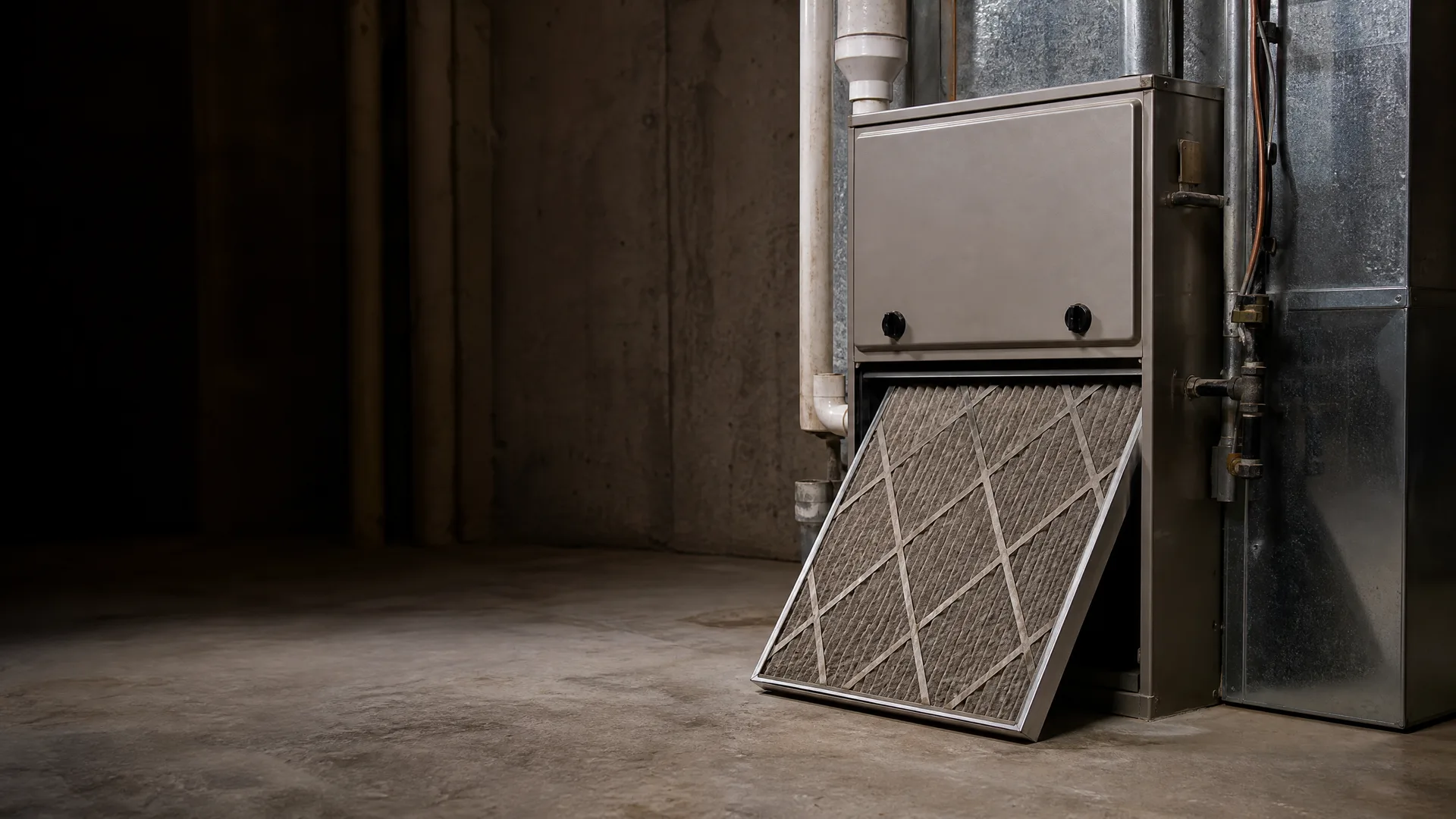
A dirty pleated air filter leans against a furnace with metal ductwork in a dim concrete basement.

It's late October, a little after four in the afternoon, and the basement light is on because the sun's already low. You've pulled the filter halfway out to check it before winter sets in, and it's grey, matted with a season of dust. The furnace sits open beside it, the burner compartment exposed. You can see the flame sensor, that short rod angled into the burner path, dulled with a film that wasn't there last fall. Upstairs the thermostat is still set low, the house holding the last of the mild days. Down here, nothing is running yet. You're just looking, filter in hand, deciding whether to call someone before the first cold snap asks the furnace to prove itself.


How do I know if my flame sensor needs cleaning?

You've heard a dirty flame sensor causes trouble, but you're not sure what that actually looks like from where you're standing, thermostat in hand, listening to the furnace cycle. You want the signs, not a theory, so you can tell whether this is what's happening in your own basement right now.

The furnace lights, runs a few minutes, then shuts off on its own

That's the pattern. The burners light, the furnace runs for a short while, then it quits even though the house is still cold. Sometimes it tries again and shuts off a second time before giving up. That's the sensor losing its read on the flame partway through the cycle, not at the start, which is why it looks like the furnace is working fine for a few minutes before it isn't. If it's doing this more than once a night, or the gaps between attempts are getting shorter, the coating on the rod has built up enough to interfere most of the time. Left alone through a Wyoming winter, those cycles get more frequent until the furnace stops lighting at all.

A gray high-efficiency furnace stands on a concrete basement floor beside sheet-metal ductwork, with white PVC vent pipes and a black flexible line running up to exposed wood floor joists, next to a wood-framed post against a concrete wall.

A clean sensor, left alone

This furnace is running the way it should. The flue and condensate lines are tied in, the gas fittings are tight, and the burners light on the first call. Nothing here needs touching yet, but the rod inside is already picking up a coating with every cycle.

A beige metal furnace with a louvered front panel stands on a concrete floor against a concrete wall, connected to galvanized sheet-metal ductwork and a metal pipe.

An older furnace, worn down

This one has seen more winters, and it shows in the black iron gas pipe and the round flue instead of PVC. An unchecked sensor on a furnace this age is more likely to be the reason it short cycles or won't light at all.

A woman wrapped in a cream textured blanket sits in an armchair beside a lit lamp and a dark window, with an open book in the foreground.
A smiling older woman with gray hair in a cream knit sweater stands in a dimly lit kitchen beside a window showing snow outside, with a round loaf of bread on the counter in the foreground.
  1. Thermostat calls for heat and the igniter glows hot.

  2. Gas valve opens and burners light off the igniter.

  3. Flame sensor rod reads the current passing through the flame.

  4. Control board holds the gas valve open as long as it senses flame.

A smiling man in a denim shirt and white t-shirt stands in an open dark doorway of a stucco house, facing a woman with long brown hair and a green jacket seen from behind in the foreground.

Clean it once a season and the furnace runs the way it's supposed to

A flame sensor that gets cleaned before winter settles in, and checked again partway through if the furnace is cycling short, keeps doing its job without you thinking about it. That's the whole answer. The rod reads the flame, the coating blocks the reading, and a few minutes with the right touch clears it. Nothing about your furnace changes because of this. It just keeps running the way it did the day it was installed.

If you'd rather have someone else handle the rod, the gas valve, and everything around them, that's a furnace tech's work, not a weekend project you have to figure out alone. Send the form on this page and a contractor who covers your part of Wyoming gets your details and reaches out. From there it's off your list. You don't have to track down who's available or whether they work on your equipment. That part is handled, and you can go back to worrying about something else.

A gray upholstered sofa with a matching cushion sits beside a potted plant and a wooden table holding a small green plant in a stone pot, near a curtained window.
An empty basement with bare concrete walls and floor, exposed wooden joists and pipes overhead, and a dark furnace with sheet-metal ductwork and vent pipes in the right corner.

The right pro for this job

One request and finding someone for the tune-up is handled.

Step 1 of 3: Equipment