Profile view of a bearded man wearing a dark baseball cap and a dark gray T-shirt against a plain off-white background.

Why one room stays cold in a Wyoming winter

Step 1 of 3: Equipment

One room stays cold because it isn't getting the same amount of heated air as the rest of the house. In a lot of homes that room is farthest from the furnace, so by the time air pushes through the ductwork to reach it, it's lost ground to closer rooms with shorter runs. It can also mean a duct is closed, crushed, or disconnected somewhere behind a wall or under the floor, or a register that's partly blocked by furniture. Sometimes it's as simple as a closed or stuck damper inside the duct itself. With how cold Wyoming winters get, even a small gap in airflow shows up fast as a room that never quite warms up no matter how high the thermostat goes. The fix depends on finding where the air is being lost or cut off, which usually means someone looking at the ductwork itself, not just the furnace.

A gray high-efficiency furnace with white PVC vent pipes stands beside sheet-metal ductwork and a water heater in an unfinished basement with concrete walls and wood framing.
One furnace runs steady, feeding every branch of ductwork its fair share through the whole Wyoming winter.
A beige gas furnace with a metal flue pipe stands in a basement against concrete block walls, beside sheet-metal ductwork, copper and white plastic pipes, and a water heater at right.
One furnace struggles to push air past closer rooms, leaving the farthest one short no matter how long it runs.

The blower pushes air down the main trunk, and branch ducts peel off that trunk to carry it to each room. A room at the end of a long branch only gets what's left after every closer room has taken its share. If there's a damper sitting partway down that branch, even one that's barely closed, everything past it runs short, while rooms before it never notice. The duct itself can be the problem too. A kink, a crushed section, or a joint that's worked loose will choke the air reaching that one room without touching anyone else's comfort. Then there's the return side. The return duct is what pulls cold air back to the furnace to get reheated, and a room sitting far from that return tends to trap its cold air instead of cycling it out. Even the vent in that room matters. Closed partway, or blocked by a rug or furniture, it cuts the air getting in no matter how long the furnace runs. Any one of these can be the reason, and sometimes it's more than one.

Where the air actually goes

  • Your furnace's blower pushes air down the main trunk line and the branch ducts split off that trunk to feed each room.
  • A room at the far end of a branch gets whatever air pressure is left after every closer room along the same run has already pulled its share.
  • A damper partway down that branch, even one barely closed, cuts flow to everything downstream of it without affecting the rooms before it.
  • A kink, a crushed section, or a loose joint in the duct feeding that one room lowers the airflow reaching it without changing how the rest of the house feels.
  • The return duct pulls cold air back to the furnace, and a room far from that return traps cold air instead of cycling it out.
  • A closed or blocked supply vent in that room, even partway, drops the air it gets no matter how hard the furnace runs.
A woman in a cream cowl-neck sweater sits by a window with snow outside, in a dimly lit living room with a sofa, lit lamp, mirror, candles and a fireplace.
A woman in a gray turtleneck sweater sits beside a large window looking out at snow-covered evergreen trees, in a dimly lit living room with a lit fireplace, lamps, couch and houseplant.
A woman in a cream turtleneck sweater stands beside a large window with snow-covered ground and bare trees outside, in a dimly lit living room with lamps, a sofa and framed art.
A woman in a grey cowl-neck sweater stands indoors near a window, looking out at falling snow, with a lamp, framed picture and couch in the warmly lit room behind her.

A damper closed in the wrong spot

Branch ducts usually have a damper where they split off the trunk line, a small handle or lever on the side of the duct. Someone may have partly closed it years ago to balance airflow for a different season, or it can slip shut on its own over time. If that cold room's damper is even half closed, every other room is getting first pick of the air and that room is living on what's left. It's a five minute check if you can get to the duct, but a lot of them sit behind a wall or under a floor where you can't reach the lever at all.

What a longer duct run costs you

Air loses heat to the duct metal the whole way it travels, and a branch running forty feet through an unheated attic or crawlspace gives up more warmth than one running eight feet through a heated basement. By the time that air reaches the farthest register, it can be several degrees cooler than what left the furnace. A bigger furnace won't fix that. The air still has the same distance to travel and the same metal to lose heat through on the way. That's a duct problem, not a furnace problem, and it needs someone who can get into the ductwork itself to find where the run is losing ground.

A bearded man in a blue and brown plaid flannel shirt stands indoors looking out a window at snow-covered trees, with a ceramic mug on the windowsill.
A man in a blue T-shirt sits on a light gray sofa, laughing while looking at an open laptop in the foreground, with a framed picture, lamp and potted plant behind him.

Matched to your furnace job

A cold room in January isn't something you fix by turning up the thermostat, because the rest of the house just gets hotter while that one room stays the same. The air isn't reaching it, and no amount of extra heat at the furnace changes that. Finding which duct, damper or register is behind it means going into the ductwork itself, checking pressure room by room, sometimes pulling a register to look at the branch line behind it. That's hours of work most people don't have, especially with a Wyoming winter outside and a houseful of rooms that are fine while one isn't. A contractor who does this for a living can walk through and know what they're looking at. Sending the request is the last thing you have to figure out about it. After that, it's someone else's job to find the problem and tell you what it'll take to get that room warm again.

A beige high-efficiency furnace in an unfinished basement, with white PVC vent pipes, a yellow gas line, metal ductwork, and exposed wood framing on a concrete floor.

The system keeping up

This furnace is doing its job. Ductwork and venting are sized right and sealed where they join, and the blower has a clear path to send heated air down every branch. A system like this can still shortchange the farthest room, but not because it's failing.


An older beige furnace with two louvered vent panels stands on a concrete basement floor, connected to galvanized ductwork and a metal flue pipe, with gas piping and flexible conduit on the wall behind.

The system falling behind

An older unit like this can develop gaps at the duct connections or a flue that isn't drawing the way it should. When a furnace this age starts losing ground, the rooms farthest from it are usually the first to show it.

A woman stands in the open black front door of a white-sided house with a dark shingled roof while a man in a navy jacket approaches along the walkway, with lantern wall lights, a potted shrub, and flowering garden beds nearby.

That cold room is costing you more than comfort

You've probably already shut the door to that room and told yourself it's not worth fighting in January. The problem is your furnace doesn't know you gave up on it. It still pushes air down that branch duct the same as always, and the blower runs the same amount of time trying to bring a room it can't reach up to temperature. That's cheap power going toward air that never makes it where you need it.

There's also what a cold room does to the rest of the house. A space running fifteen or twenty degrees under everything around it pulls heat out of neighboring walls and floors, so the thermostat reads fine while that back bedroom or bonus room stays miserable. Catching it now, while it's a damper or a duct run and not a cracked heat exchanger, is the kind of thing worth sending to someone who can look at your ductwork directly. A contractor who knows Wyoming furnaces can tell you fast whether this is a ten-minute fix or something bigger.

A dark ceramic mug on a round wooden table beside a light grey sofa with a woven cushion and knit throw, with a window, potted plant, floor lamp and wooden cabinet blurred in the background.
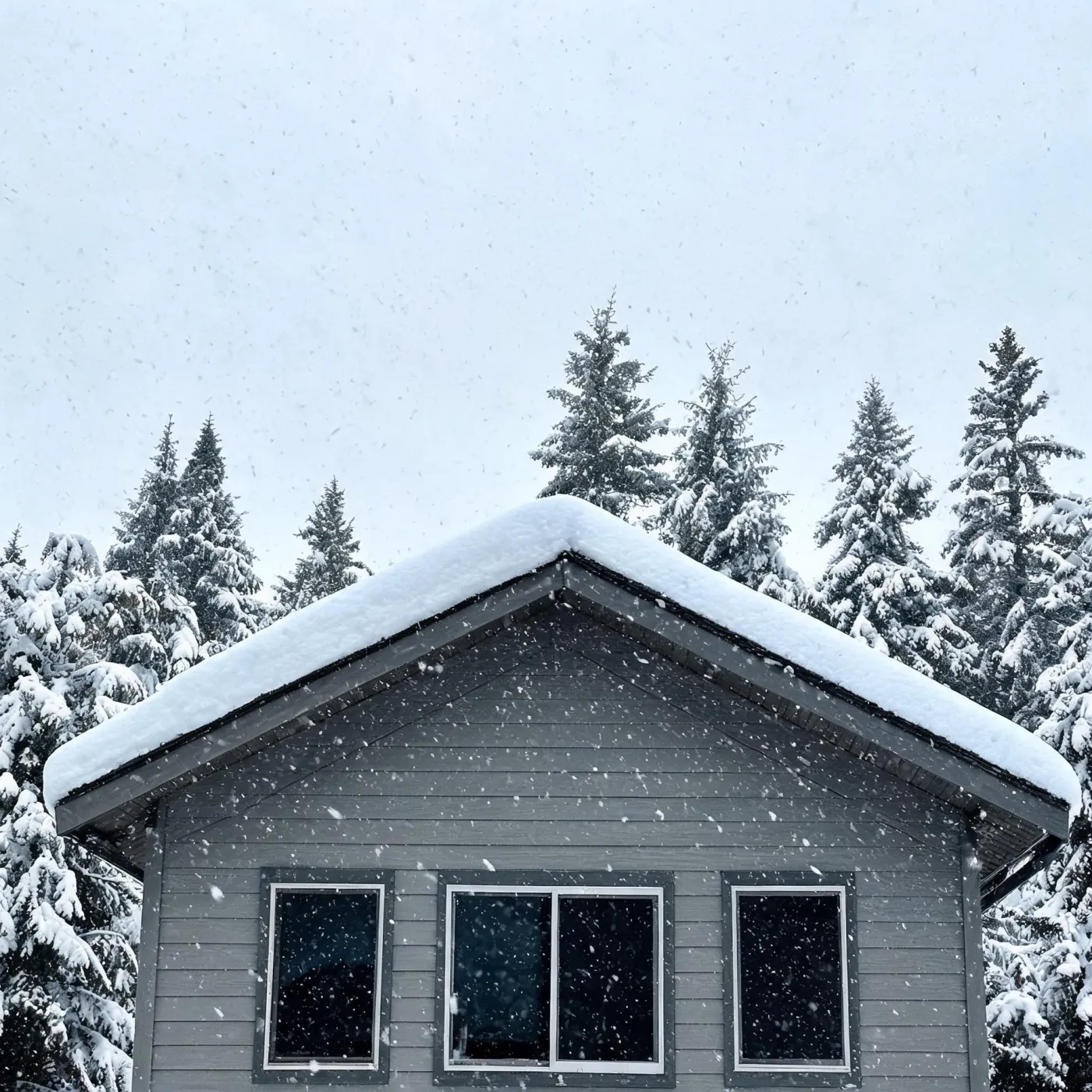
Gable end of a gray horizontal-siding house with three dark windows, its roof covered in thick snow, surrounded by snow-laden conifers under a pale sky with falling snowflakes.

Winter nights across Wyoming average 13°F, according to NOAA. At that temperature your furnace isn't cycling off much. It's running long stretches just to hold the thermostat setting, and the blower is moving air down every branch duct for most of the night. That's exactly when a cold room shows its worst side. The rooms near the furnace get first claim on that air and warm up fine. The one at the end of a long branch, already getting less, falls further behind the colder it gets outside. You'll notice it most around 2 or 3 a.m., when the gap between that room and the rest of the house is widest.

NOAA nClimDiv 1991-2020 county normals weighted by homes

An older gas furnace with two louvered front panels stands on a concrete basement floor beside galvanized sheet-metal ductwork, pipes, and a weathered concrete wall.
Before you get your furnace repair
A gray high-efficiency furnace in a basement, connected to sheet-metal ductwork on the left and white PVC vent pipes above, with black gas and drain piping and an exposed wood-stud wall with OSB sheathing on the right.
After you get your furnace repair

13°F nights, one room still cold

The furnace keeps running, every branch gets its share, and that one room still can't hold heat the way the rest of the house does.

Find a pro near me

A fixed branch, a warm room

Once whatever's choking that duct gets found and cleared, the room draws its share of air again, same as every other room in the house.

Find a pro near me

Winter nights average 13°F statewide

At 13°F, that branch duct is carrying hot air most of the night just to keep the rest of the house comfortable. Whatever's choking it off in that one room has to work against a furnace that isn't letting up.

NOAA nClimDiv 1991-2020 county normals weighted by homes

One Room, One Fix

  • One room runs cold because its branch duct is losing airflow somewhere between the furnace and the vent.
  • A closed damper, a kinked flex run, or a blocked register can all cause the same cold room with different fixes.
  • Turning up the thermostat only makes the rest of the house warmer while that room stays the same.
  • A contractor can trace the branch duct and find exactly where it's losing pressure.
  • Once the duct is cleared or the damper is reset, that room can hold heat like the rest of the house.
  • Sending the form is the last thing you have to do yourself; finding the right contractor becomes their job, not yours.

The cold room has an explanation, not a mystery. Somewhere between the furnace and that vent, the branch duct is giving up pressure it needs to carry heated air the rest of the way. It might be a damper someone closed years ago and forgot about. It might be a kink in the flex duct where it was routed through a tight space, or a register packed with dust and pet hair until barely any air gets through. Each one looks the same from where you're sitting, a room that never quite gets warm, but each one needs a different fix. That's why turning up the thermostat doesn't help. The furnace already knows that room needs heat and is sending it. The air just isn't making it there, so every other room absorbs the extra and that one stays exactly as cold as before. A contractor who traces the branch duct from the trunk line to the register can find the point where the air is being lost, and once that's cleared or reset, the duct can carry what it was sized to carry. The room holds heat the way it should have all along, through the coldest nights and the rest of the winter after that. Sending the form is the last step that's yours. After that, matching you with someone who handles this kind of repair is the part you don't have to manage.

A sunlit room corner with cream walls, white baseboard and window sill molding, a wood floor, and a dark wooden cabinet on the right holding a pale vase with leafy branches below a framed picture.
A round woven basket with a cream fringed throw draped over its rim sits in a corner on a wood floor, beside a dark wooden cabinet holding a stone vessel, with sunlight from a nearby window on the beige walls.
Interior corner of a room with a white-trimmed window and sill, beige walls, white baseboard molding, and a wood floor with sunlight falling across it; green foliage is blurred outside the window.
Interior corner of a room with cream walls, white baseboard molding, a window with a white sill showing blurred green foliage outside, and a wood plank floor lit by sunlight.
Sunlit interior corner showing a beige wall with a small crack above white baseboard molding, wood plank flooring, a patterned rug edge at lower left, and a window with sill at upper left.

A local pro for your furnace repair

Get the furnace repair search off your mind today.

Get my match

It costs nothing to send, and you don't have to hire anyone.