
Why your furnace is leaking water in Wyoming

Step 1 of 3: Equipment

Water pooling near your furnace almost always comes from the condensation line, not a leak in the furnace itself. If you have a high-efficiency furnace, it produces condensation as a normal part of burning gas, and that water drains out through a plastic line to a floor drain or a condensate pump. That line clogs with algae and sediment over time, or the pump fails, and the water backs up and spills out near the unit instead of draining away. A cracked heat exchanger can also cause water or a hissing sound, which is less common but more serious. Either way, a furnace was never built to leak, so water on the floor means something downstream needs attention now, before it damages the furnace itself or the floor underneath it.

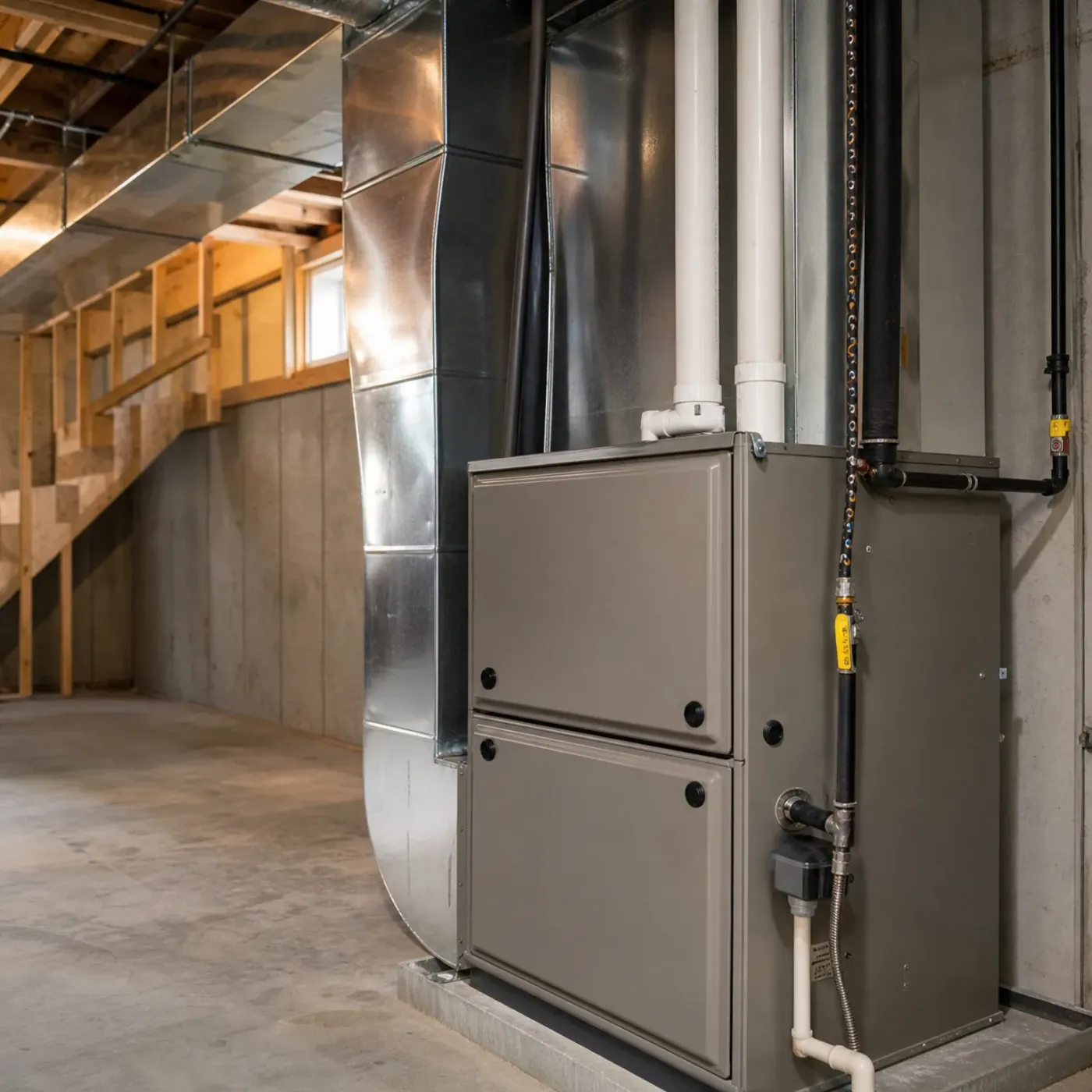
A gray high-efficiency furnace with white PVC vent pipes stands on a concrete pad in a basement, beside sheet-metal ductwork, copper piping and a poured concrete wall with wood framing at left.

Normal condensation drain

A high-efficiency furnace makes water whenever it runs. That water should leave through the plastic condensate line and never reach the floor. Check that line where it drains and make sure it isn't cracked or disconnected. If the water is going where it's supposed to, nothing here needs attention.


A beige gas furnace in a basement with a metal flue pipe, galvanized sheet-metal ductwork to its left, and gas and water pipes along the concrete wall to its right.

Water pooling at the furnace

An older furnace without that plastic drain line shouldn't be producing condensation at all, so standing water near it usually points to the flue pipe or a cracked heat exchanger. Check the shutoff valves and pipes nearby too, since a slow leak from one of those can look like it's coming from the furnace.

A woman in a cream cowl-neck sweater stands in a lamp-lit room looking out a window at a snow-covered yard with shrubs and bare trees at dusk.
A woman in a gray turtleneck sweater stands near a large window in a lamp-lit living room, looking out at falling snow and snow-covered conifers.
A woman in a chunky knit sweater stands by a large window looking out at snow-covered ground, with a dimly lit living room containing a gray sofa, framed artwork, shelves and table lamps behind her.
A woman in a gray turtleneck sweater stands in a dimly lit living room with a lamp and bookshelves, looking out a multi-pane window at falling snow.

Why the line clogs in the first place

Condensate water is slightly acidic, and over time that eats at the inside of the plastic line and the fittings it runs through. Algae and sediment build up in the same spots, usually right where the line bends or drops into the drain. A clog there backs water up into the trap and the furnace cabinet, and it shows up as a puddle on the floor long before you'd notice anything wrong with the heat itself. A furnace can keep running fine while this happens, which is why the leak is often the first sign anyone gets.

What a cracked line looks like

A split or loose fitting in the condensate line lets water escape before it ever reaches the drain, so you might find it pooling a foot or two from the furnace rather than directly under it. Plastic line gets brittle with age and can crack where it's been bent too sharply or rubbed against ductwork. Look along the whole run, not just the end near the furnace. A line that's pulled apart at a joint is an easy fix to spot but an easy one to miss if you only check where the water first appears on the floor.

A beige metal furnace with a louvered front panel stands on a concrete floor against a concrete wall, connected to galvanized sheet-metal ductwork and a metal pipe.
Before you get your furnace repair
A gray high-efficiency furnace stands on a concrete basement floor beside sheet-metal ductwork, with white PVC vent pipes and a black flexible line running up to exposed wood floor joists, next to a wood-framed post against a concrete wall.
After you get your furnace repair
A gray high-efficiency furnace in an unfinished basement, connected to large galvanized sheet-metal ductwork, PVC vent pipes, a gas line and flexible conduit, with concrete walls, wood framing and a staircase in the background.

Get your furnace to the right pro

One request and the search for a pro is handled.

Tell a local repair pro what your furnace is doing.

Send it today

There's no charge for the request.

What are you noticing near your furnace right now

Look for a damp patch on the floor near the furnace, or water sitting in the bottom of the cabinet itself. Sometimes it's a few drops a day that dry before you notice them. Sometimes it's enough to pool and spread toward nearby drywall or the subfloor underneath. You might hear a gurgle from the condensate line when the furnace cycles on, or smell something musty if water has been sitting for a while. If this keeps running without being looked at, that moisture can rust the cabinet from the inside, warp the floor underneath it, or grow mold somewhere you won't see until it's spread.

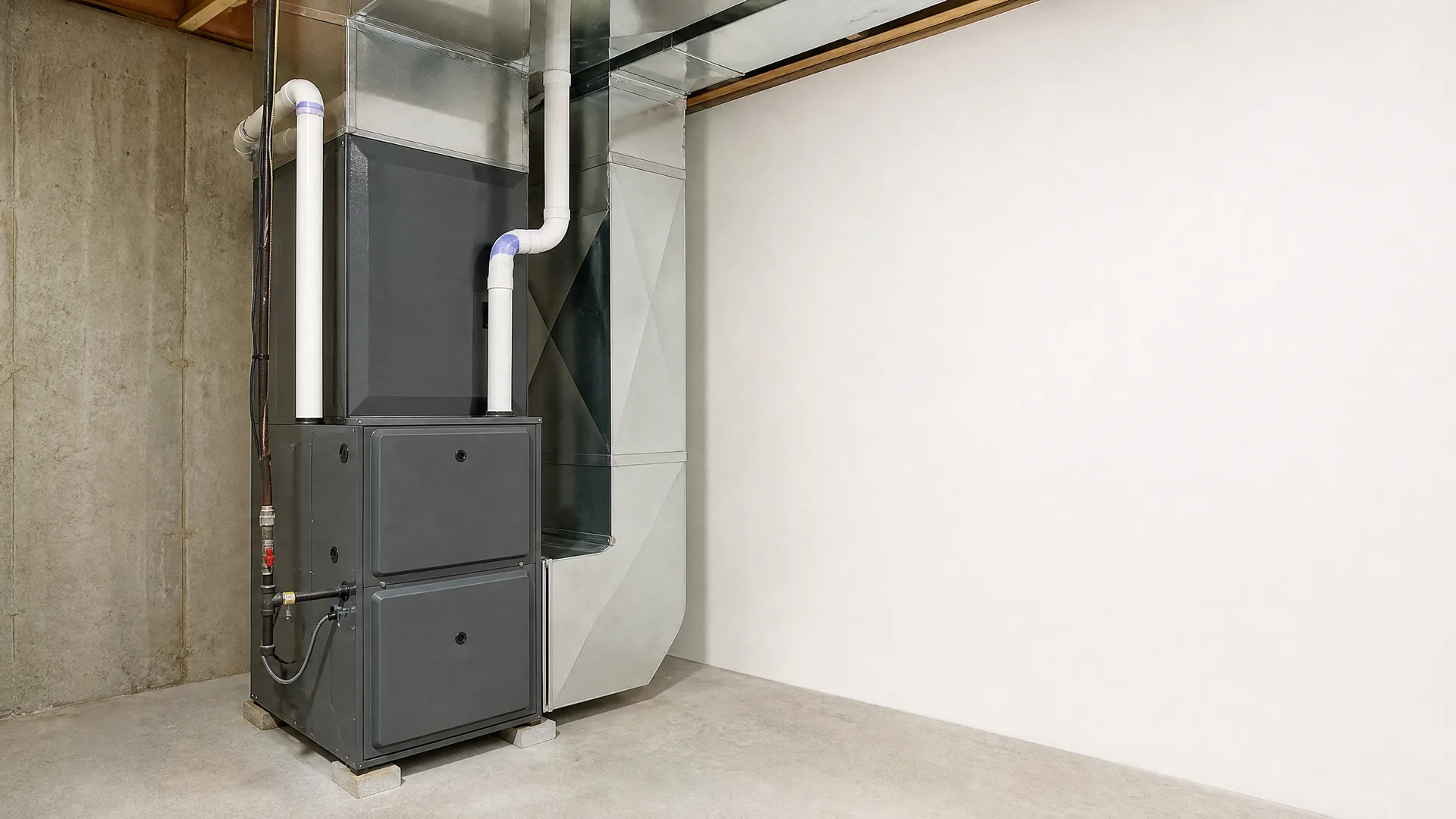
A dark gray high-efficiency furnace with white PVC vent pipes stands against a concrete basement wall, connected to sheet-metal ductwork running along the ceiling joists.

A clogged line in a cold snap

A condensate line can freeze solid where it runs out through an unheated wall or sits exposed to outside air. Once the ice blocks it, the water backs up into the furnace and finds the floor instead. This shows up fast when temperatures drop hard, which happens often enough in Wyoming winters. The furnace keeps running and keeps making water, so the puddle grows every hour the blockage sits there.

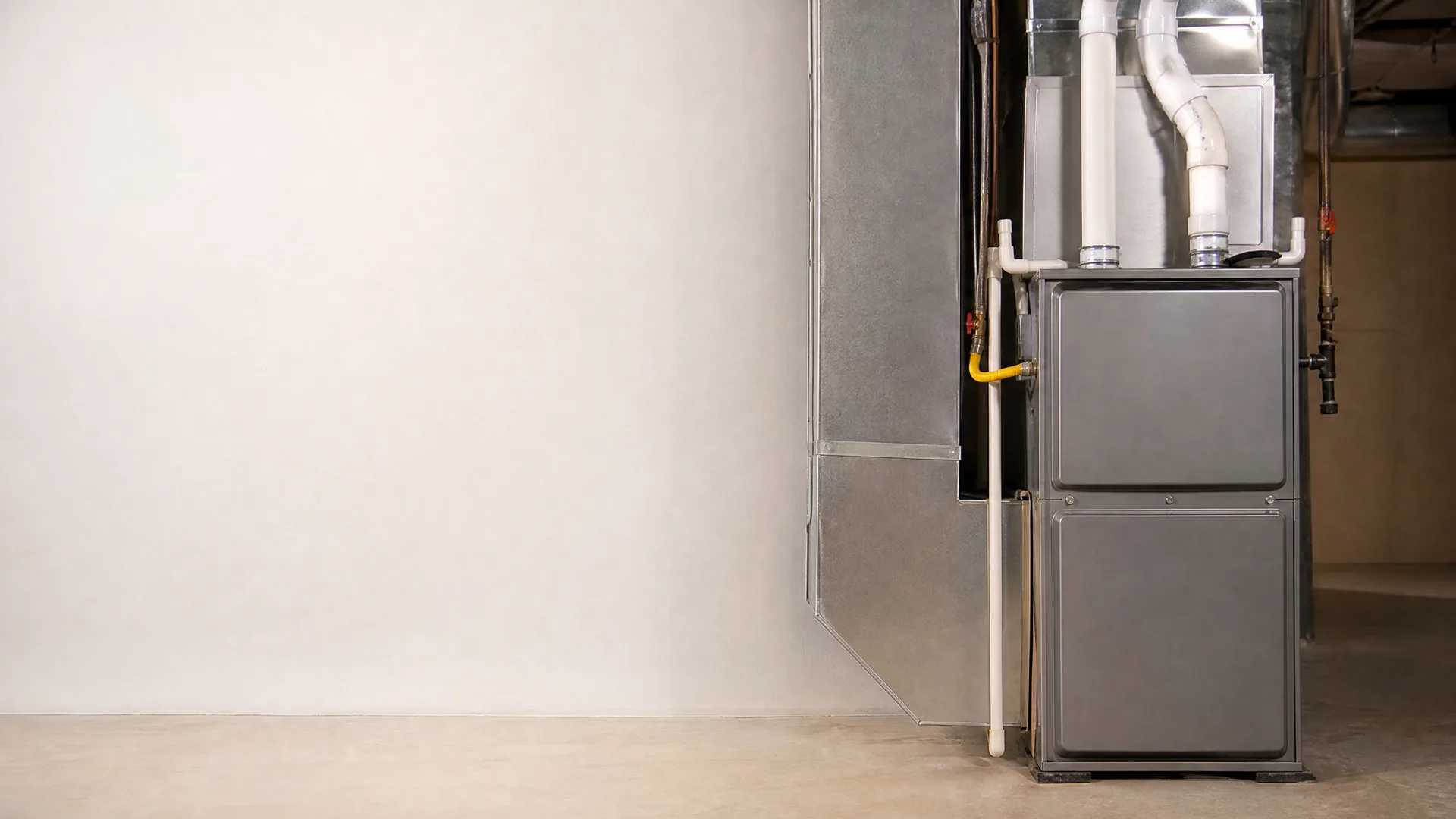
A gray high-efficiency furnace with white PVC vent pipes, a yellow gas line and metal ductwork stands against a plain light wall in a basement with a concrete floor.

A slow leak nobody catches

Some leaks start small, a few drops that dry before anyone sees them. A hairline crack in the line or a loose fitting can drip for weeks without pooling enough to notice. By the time water is visible on the floor, the line or the fittings around it have usually been failing for a while. Checking the drain path now and then catches this before it turns into a bigger mess inside the cabinet.

Winter nights average 13°F statewide

At 13°F, your furnace is running almost nonstop to keep up, which means more condensation moving through that drain line each night. A line that's already narrowed by sediment or a slow crack has less room for error when the furnace barely shuts off.

NOAA nClimDiv 1991-2020 county normals weighted by homes

A bearded man in a plaid flannel shirt stands indoors looking out a frost-covered window, with a steaming dark blue mug on the wooden sill and snow-covered trees outside.
A smiling man in a dark blue T-shirt sits on a light gray sofa in a living room with a wooden shelf and window behind him, with a laptop edge visible in the foreground.

Water by the furnace, explained

  • Water near your furnace almost always traces back to the condensate line, not the heat exchanger or burners.
  • A cracked, clogged, or frozen drain line is the most common reason that water ends up on the floor instead of outside.
  • Wyoming's cold nights make a frozen condensate line a real risk wherever it runs through an unheated wall or outside air.
  • The same symptom, a wet patch by the furnace, can mean a slow sediment clog or a sudden freeze-up, and the fix differs.
  • A contractor can trace the line, find where it's blocked or cracked, and clear or repair it before the water damages the floor or the furnace itself.
  • Sending in your information means a contractor who handles this kind of repair reaches out to you, so you're not the one tracking down who's available.

Most of the time, water showing up near your furnace is not a sign of a bigger problem with the furnace itself. It's the condensate line, either clogged with sediment and algae built up over time, cracked from acid in the water wearing at the plastic, or frozen solid where it runs through cold air on a hard Wyoming night. Each of those sends the water somewhere it shouldn't go, usually straight down onto the floor of the cabinet or the floor underneath it. The difference matters for the fix. A slow clog built up over months looks a lot like a sudden freeze-up on a night that dropped into the teens, but one gets cleared and one gets insulated or rerouted, and guessing wrong means the same puddle shows up again next week. What doesn't change is that the heat exchanger and burners are rarely the cause, so the furnace itself is usually fine underneath this.

A contractor who handles this kind of repair can trace the line from where it leaves the furnace to where it drains, find the exact spot it's blocked or split, and fix that spot rather than guess at it. Once you send in your information, that part stops being something you have to figure out on your own. You're not calling around trying to find who's free this week. Someone who does this work gets your details and reaches out, and from there it's their job to sort out the line, not yours.

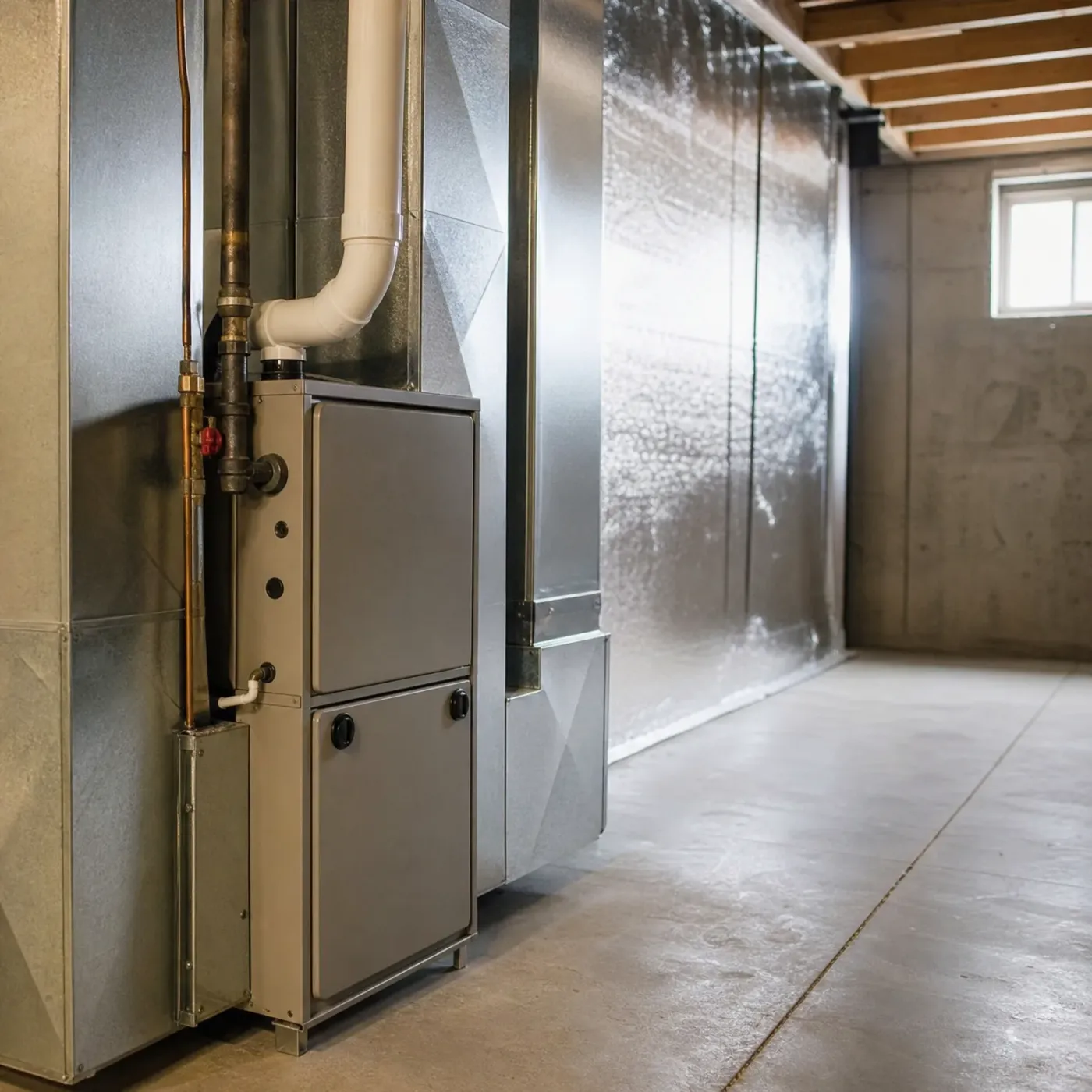
A gray furnace with a white PVC vent pipe and copper piping stands beside large galvanized sheet-metal ducts in an unfinished basement with concrete floor, concrete walls, foil-faced insulation, and a small window.

The right pro for this job

Find a furnace pro

Send it once and finding someone is no longer on you.

You only hire the pro if you want to.