Why your furnace smells like burning in Wyoming

Step 1 of 3: Equipment

Why does my furnace smell like it's burning?

Your furnace kicks on for the first time in months and the house fills with a burning smell. In Wyoming, where gas furnaces run hard from October through the coldest stretch of winter, that smell after months of sitting idle is common enough, but it can also mean something that needs a look before you run the furnace again.

Usually it's dust burning off, but not always

The first time your furnace fires up after sitting all summer, dust that settled on the heat exchanger and burners burns off and gives off that smell. It should clear in ten or fifteen minutes and not come back. If the smell is sharper, like hot metal or plastic, or it lingers past the first run, that's a different problem. A cracked heat exchanger, a failing blower motor, or wiring that's overheating inside the cabinet can all smell like burning. Any of those is worth shutting the furnace off and having someone look at it, since running a furnace with a cracked heat exchanger risks carbon monoxide getting into the air you breathe.

A gray high-efficiency furnace with white PVC venting pipes stands on blocks in a basement next to sheet-metal ductwork, with exposed wood framing on the left and a concrete wall and floor.

Dust burning off

This is the first run of the season, nothing more. Dust settled on the heat exchanger over the summer, and it burns off within an hour. The furnace cycles normally, the smell fades on its own, and the air coming out of the vents feels like it should.

An older gas furnace with two white PVC vent pipes stands on a concrete basement floor beside galvanized sheet-metal ductwork, flexible conduit, and piping along a wall.

Something wrong inside

The smell doesn't fade, or it comes back every time the furnace kicks on. It might carry an edge, like hot metal or burning plastic, and you may hear a rattle or a louder hum from the cabinet. That calls for a look before you run it again.

First Run Smell or Something Burning

Let it run

  • If the smell showed up on the first cold morning you fired the furnace up, it's likely dust burning off the heat exchanger and clears within an hour.
  • The smell fades on its own and doesn't come back on the next cycle once the dust is gone.
  • Air from the vents feels and smells normal again after that first run finishes.
  • No part needs replacing for this one. It's leftover dust, not a failure.
  • If the burning smell is gone by the second time the furnace kicks on, there's nothing left to fix.

Get it checked

  • If the smell keeps coming back every time the furnace cycles, something inside is burning other than dust.
  • A smell like hot metal or burning plastic points to a part overheating, not a one-time clean-off.
  • A sharp, chemical smell is different from dust and shouldn't be waited out.
  • If the smell showed up partway through the winter, not on the first run, that's not the dust explanation.
  • Letting a furnace run with a burning smell past that first hour risks damage to whatever part is overheating.
  • A contractor can open the furnace and tell you in minutes which of these it is.
A beige high-efficiency furnace stands on a concrete basement floor beside sheet-metal ductwork, with white PVC vent pipes, flexible conduit and copper and steel piping running up a concrete wall to an electrical box.

Normal first run

This furnace cycles the way it should. Air moves steadily through the ductwork, the flue pipes overhead vent the exhaust, and the burning smell is already gone. By the second or third cycle, there's nothing left to smell.

An older gas furnace with a louvered front panel stands on a concrete basement floor beside large sheet-metal ductwork, a metal flue pipe, copper piping and wood framing.

Something's wrong

This furnace keeps putting off a smell well past the first hour. Dust sits thick on the concrete around its base, a sign it hasn't been serviced in a while, and the smell that should have cleared is still there on the third or fourth cycle.

A smiling man in a dark navy sweater sits on a light sofa in a living room, with a glass bowl of popcorn on a wooden coffee table and bookshelves behind him.
A smiling man in a dark green sweater sits on a tan leather sofa in a dimly lit living room, with a bowl of popcorn in the foreground and a kitchen area blurred behind him.
A smiling middle-aged man in a dark shirt sits on a gray sofa in a living room, with a bowl of popcorn on a side table and shelves, a window and kitchen area behind him.
A smiling bearded man in a dark gray t-shirt sits on a gray couch in a living room, with a large glass bowl of popcorn on a wooden table in the foreground.

Hand off the search today

Explain the job once and skip repeating it on every call.

You only hire the pro if you want to.

Why the smell burns off fast

A gas furnace heats a metal heat exchanger to run the flame safely. Any dust that settled on it over the summer scorches off that surface the moment it gets hot, and there's only so much dust on there to begin with. That's why the smell shows up strong on the first cycle and thins out by the second or third. Once that layer is gone, nothing is left to burn, and the exchanger itself doesn't produce an odor when it's clean and working right.

Why a wiring smell doesn't

A smell like melting plastic comes from insulation on a wire or a part overheating, not from dust. That material doesn't burn away and disappear the way dust does. It keeps producing the smell as long as the component stays hot, cycle after cycle, because the wire or part causing it is still there and still failing. Wyoming winters put a gas furnace through long, repeated runs, which is exactly the kind of use that pushes a weak connection past where it was holding before.

Winter nights average 13°F statewide

At 13°F, your furnace isn't cycling on and off for warmth, it's running long stretches to keep up. A smell that lingers past the first hour under that kind of demand points to something more than dust, and it's worth having a contractor look before the next cold night.

NOAA nClimDiv 1991-2020 county normals weighted by homes

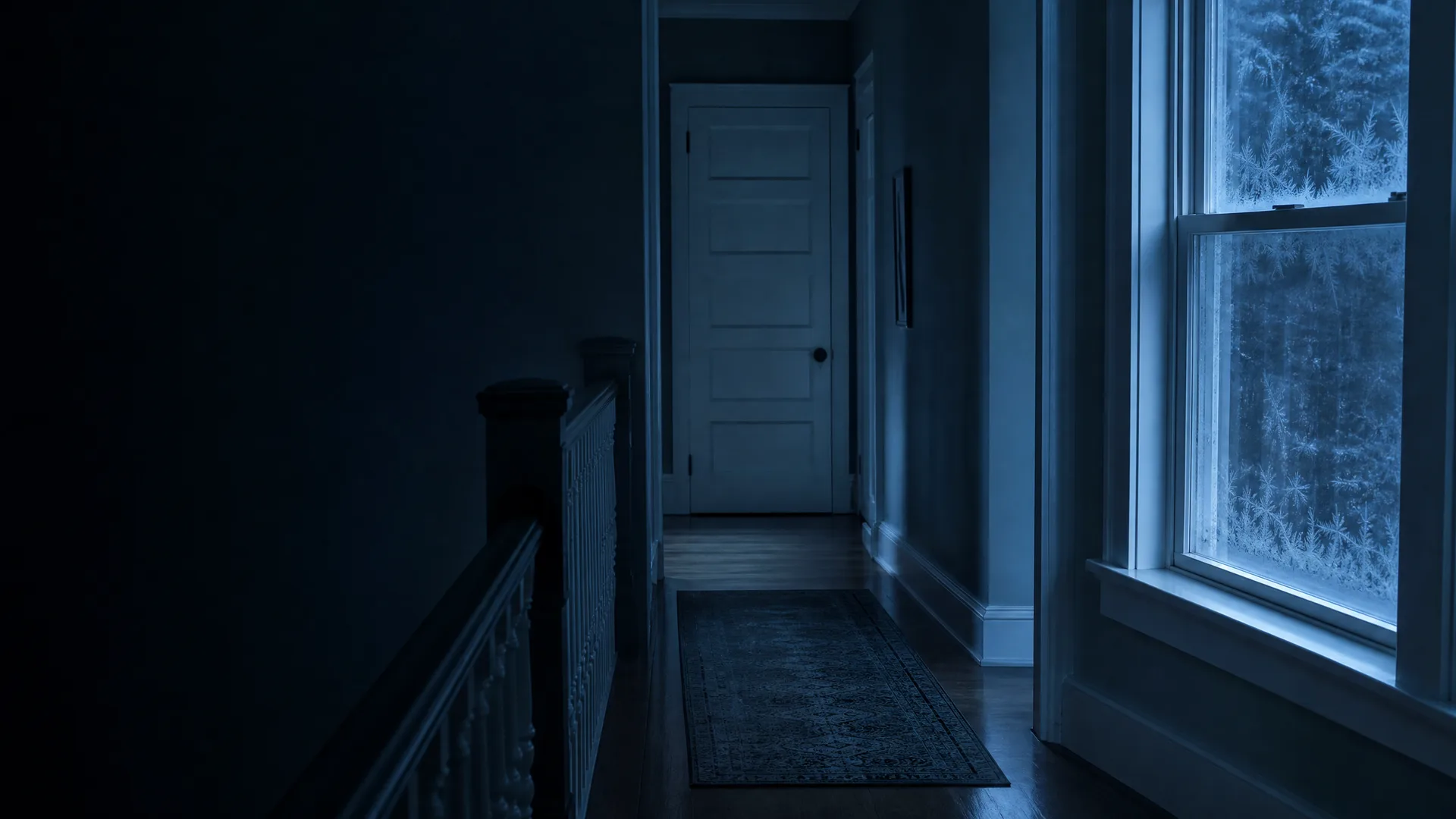
Dimly lit interior hallway at night with a closed white paneled door at the end, a long runner rug on a wood floor, a stair railing at left, and a frost-covered window admitting blue light at right.

It's 2 a.m. and the house is dead quiet, the kind of quiet where you notice the vents aren't blowing. You get up anyway, some habit from the night the pipes froze two winters back, and the hallway floor is cold under your feet. Frost has crept up the edges of the window again. Outside, it's the coldest part of January, the stretch where the furnace should be running long and steady, not sitting idle. You stand there in the dim blue light waiting to hear it kick on. Nothing. You put a hand near the vent. No air, no warmth, nothing moving at all.

Is this smell normal or should I worry

You'd notice it first thing in the morning, usually, when the furnace kicks on before anyone's awake. A sharp, dusty smell for a few minutes, gone by the time you've made coffee. That's ordinary. What's not ordinary is a smell that shows up again on the next cycle, or one that's sharper, like hot metal or burning plastic instead of dust. You might also notice it paired with the furnace running longer than usual, or the air coming out of the vents feeling weaker than it should. A furnace that keeps smelling off after that first run is telling you something inside it needs attention, and running it anyway on the coldest nights of the year isn't worth the risk to the house or to the furnace itself.

  1. Dust on the heat exchanger ignites as the burner fires.

  2. The flame heats the metal exchanger past the dust's burn point.

  3. Air moving through the ductwork carries the smell into the house.

  4. The flue pipe vents the exhaust and the smell fades.

A beige sheet-metal furnace with a louvered upper panel stands on a concrete basement floor, connected to galvanized ductwork, white PVC vent pipes, and a metal gas line with an electrical box.
Before you get your furnace repair
A gray high-efficiency furnace with white PVC vent pipes stands in an unfinished basement beside sheet-metal ductwork, gas piping, and insulated stud walls on a concrete floor.
After you get your furnace repair
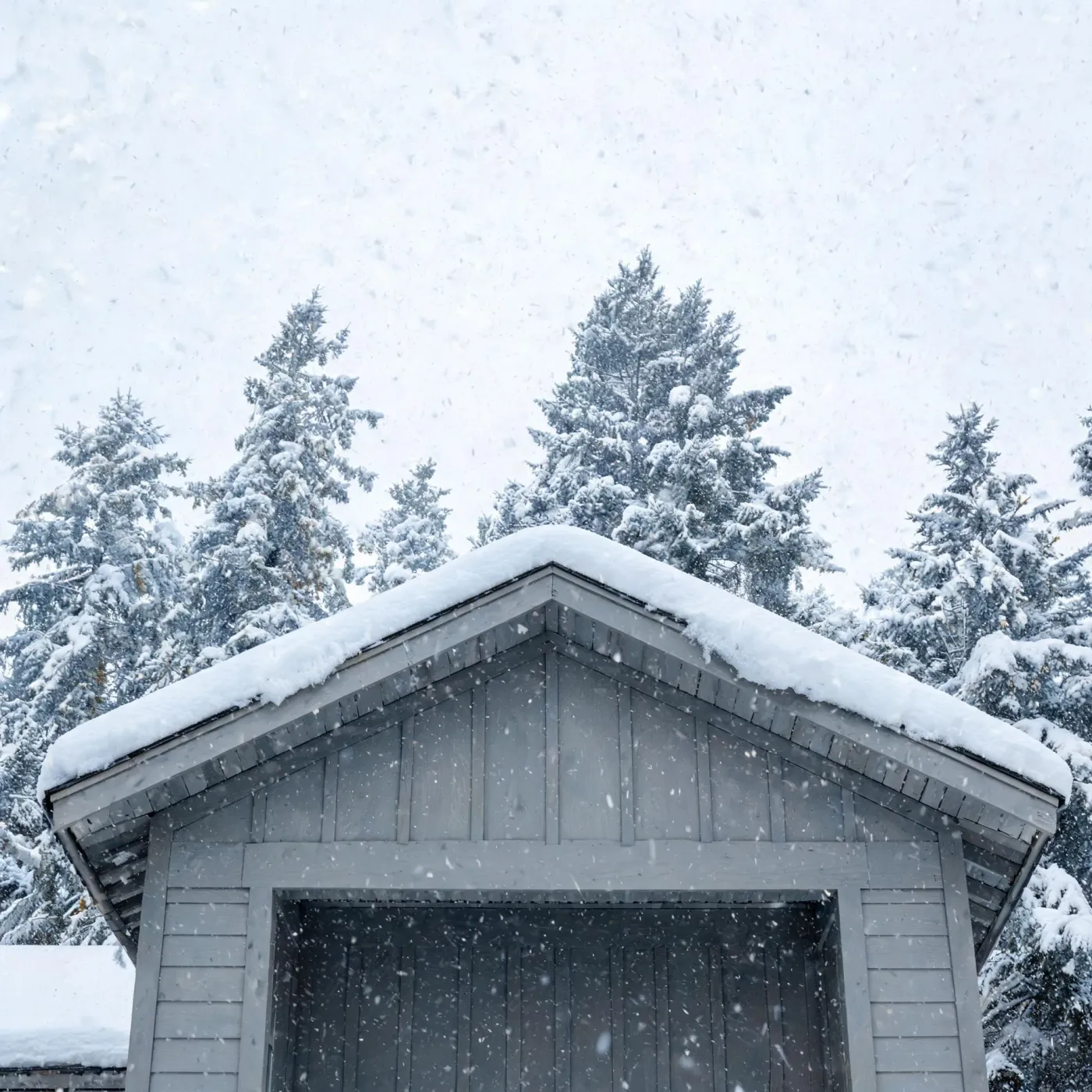
Gable end of a gray wood-clad building with a snow-covered roof and open doorway, backed by snow-laden conifers during falling snow.

Statewide, winter nights average 13°F. At that temperature your furnace isn't just kicking on for a few minutes and shutting back off. It's running long stretches to keep the house above freezing, sometimes most of the night. That kind of extended run time means more hours where the burner is lit and air is moving across the heat exchanger. A burning smell on the first cold morning is normal, but once nights are this cold, a smell that shows up again later, or lingers past the first hour, has had plenty of heat and runtime to reveal a real problem rather than just dust. Source: NOAA climate normals.

NOAA nClimDiv 1991-2020 county normals weighted by homes

A woman in a dark gray sweater reclines on a couch with her eyes closed and a knit blanket over her lap, an open book resting face-down in front of her, with a lit table lamp and shelving blurred in the background.
A bearded man in a dark navy sweater over a collared shirt smiles and looks off to the side while seated at a dinner table with a glass of red wine, a lit candle, and a plate of food in the foreground of a dimly lit room.

A burning smell on the first cold morning of the year is dust on the heat exchanger, and it clears within the hour. A smell that lingers past that first cycle, or shows up weeks into winter instead of at the start, means something else is burning. At 13 degrees outside, your furnace is running long stretches to keep the house warm, and that's not the time to wait and see. If you've gotten this far still smelling it on the third or fourth cycle, you already know which one you've got. What's left is getting someone out to look at it, without spending the evening calling around, explaining the same thing twice, and weighing quotes against each other. Send the form and that part is done. You won't be the one tracking down who's available or chasing a callback. Someone takes it from here.

Dark standing-seam metal roofs of wood-sided buildings in the foreground, with a single spruce tree, grassy hills, conifer forest, and snow-streaked mountain peaks behind.

Stop chasing a furnace pro

Hand off the search

Asking costs nothing, and the choice to hire stays yours.

A furnace that keeps smelling like something's burning is one more thing to track at night when you're already checking vents and feeling for cold floors. Send the request and stop carrying that alone. Someone who can look at it, the actual furnace, takes it from here.