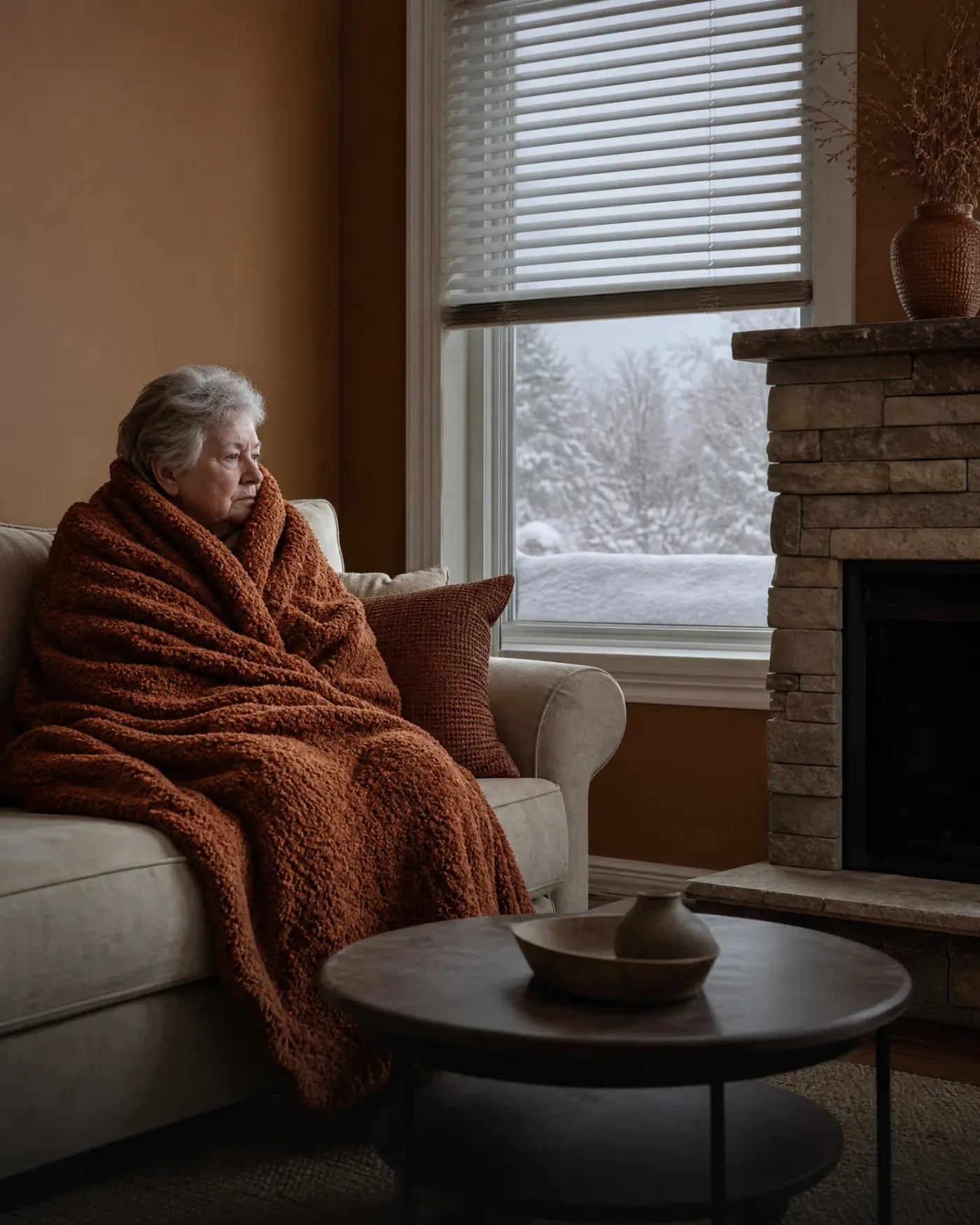
Why your furnace won't shut off in Wyoming
A furnace that won't shut off is usually stuck because the thermostat thinks the house still needs heat, or because a part inside the furnace is telling it to keep running even after the house is warm. The most common cause is a thermostat set wrong or failing to read the room, so it keeps calling for heat. Another common cause is a stuck relay or a dirty flame sensor confusing the control board about whether the burners are actually on. A cracked heat exchanger can also trip a limit switch that keeps the blower running nonstop as a safety response. None of these fix themselves, and a furnace that runs constantly wears out its blower motor and burns more gas than it should, even with power priced the way it is in Wyoming. Catching it now, before a cold stretch, is the difference between a quick fix and a furnace that fails when you need it most.

The thermostat tells it to stop
A thermostat reads the air near itself, not the whole house. If it sits in a cold spot, near a draft or an outside wall, it can think the house is still cold when the rest of the rooms are warm enough. It keeps sending the call for heat. A thermostat set to "on" instead of "auto" will also keep the blower running even after the burners shut off, which can look like the same problem.

A stuck limit switch inside
The furnace has a limit switch that tells the burners to shut off once the air inside reaches a set temperature. If that switch sticks closed, the furnace keeps firing past the point it should stop. A dirty flame sensor can cause something similar, letting gas valves stay open longer than they're supposed to. Either one means a part is reporting the wrong thing to the control board, not that the house actually needs more heat.
Thermostat or furnace: which one is stuck
Thermostat problem
- If you turn the thermostat down below room temperature and the furnace keeps running, the thermostat itself is likely at fault.
- A thermostat with dead batteries or a loose wire can lose track of what it already told the furnace to do.
- Moving the thermostat setting and watching whether the furnace responds within a minute or two tells you if it's still in charge.
- An older mechanical thermostat can drift out of calibration over the years and read the room wrong by several degrees.
- This is usually the cheaper fix, since the part is small and sits in plain sight on the wall.
Furnace problem
- If the thermostat is set correctly and reads the room temperature right, the problem is inside the furnace itself.
- A stuck relay or a failing limit switch can hold the burners or blower on even after the thermostat stops asking for heat.
- A cracked heat exchanger can sometimes trip a furnace into running longer as it tries to reach the temperature it's told to hit.
- This kind of failure usually needs a Wyoming furnace contractor to open the cabinet and test the parts with a meter.
- Left alone, a furnace stuck in this state runs the blower and burners far longer than the house actually needs.
The thermostat calls for heat and signals the furnace to start.
The igniter or pilot lights the burners inside the furnace.
The blower pushes warm air through the ducts into each room.
The thermostat reads room temperature and should tell burners to stop.
Is your furnace running long after the house feels warm?
You've probably noticed the house is warmer than the thermostat setting, or that the blower never seems to rest between cycles. Some rooms might feel stuffy while others are fine, and you can hear the burners still going well past when they should have shut off. Touch a supply vent and the air coming out may feel hotter than usual. Left alone, this runs up your gas use for no reason, since power here is cheap but gas is doing all the work. It also wears down the blower motor and the heat exchanger faster than normal use would, since neither one is built to run nonstop.






A furnace pro near you
A furnace that won't shut off in a Wyoming winter is not something to leave alone and hope it sorts itself out. It can mean a cracked heat exchanger, and that's not a part to run on faith while it keeps cycling heat through the house. Gas is cheap to burn here, but a furnace stuck running still puts more wear on the blower and the igniter than it should see in one winter, and a part that fails outright on a cold night in Cheyenne or Casper leaves you without heat until someone can get to it. Most homes here count on gas heat to get through the season, so a furnace that won't stop running is worth having checked now, while it's still just running too long and not yet a furnace that's quit. A contractor can look at the thermostat and the parts inside and tell you which one is behind it. Send the request and let someone else carry it from here.
Catching it now versus waiting it out
A furnace that won't shut off costs you almost nothing to check this week. A stuck relay, a thermostat in the wrong spot, a flame sensor coated in residue, these are small jobs on their own. A contractor can test the limit switch, check the thermostat wiring and clean the sensor in one visit, and the furnace goes back to cycling normally. Gas is cheap in Wyoming, so the running itself isn't draining your wallet fast. What it's doing instead is putting hours on a blower motor that should be resting half the day, and heating rooms past the point anyone in the house wants them.
What waiting actually risks
Leave it running through a full winter and the wear adds up somewhere. A blower motor that never gets a break wears out sooner than one that cycles on and off the way it's built to. A cracked heat exchanger, one of the reasons a furnace won't shut off, doesn't heal itself, and running the furnace nonstop keeps stressing that crack every hour it's on. By spring you might be looking at a motor replacement or a heat exchanger swap instead of a switch or a sensor. The furnace itself tells you which path you're on: short, normal cycles that end on their own, or one that never seems to stop.


Winter nights average 13°F statewide
At 13°F, your furnace is working hard most of the night, every night, all winter. A thermostat stuck in a bad spot or a flame sensor losing its signal shows up fast at that temperature, because the furnace has no room to coast.
NOAA nClimDiv 1991-2020 county normals weighted by homes



A furnace that won't shut off has a reason, and it's fixable
Somewhere between the thermostat and the burners, something is stuck telling the furnace to keep going. A bad sensor spot, a worn flame sensor, a relay that won't let go, a crack in the heat exchanger. Each one points to a different part, and each one has a different fix. None of them get better by running longer.
Once you send the details in, the work of figuring out which one it is stops being yours to carry. A contractor who handles furnace repair in your area gets your information and reaches out to you about what you're seeing. You don't have to diagnose it yourself or guess which part to ask about. You just need to get the furnace looked at before a worn part turns into a bigger repair, and that part of it is off your plate the moment you send the form.






A local pro for your furnace repair
Get the furnace repair search off your mind today.
You only hire the pro if you want to.