Tell us about the job
Takes about a minute. No obligation.
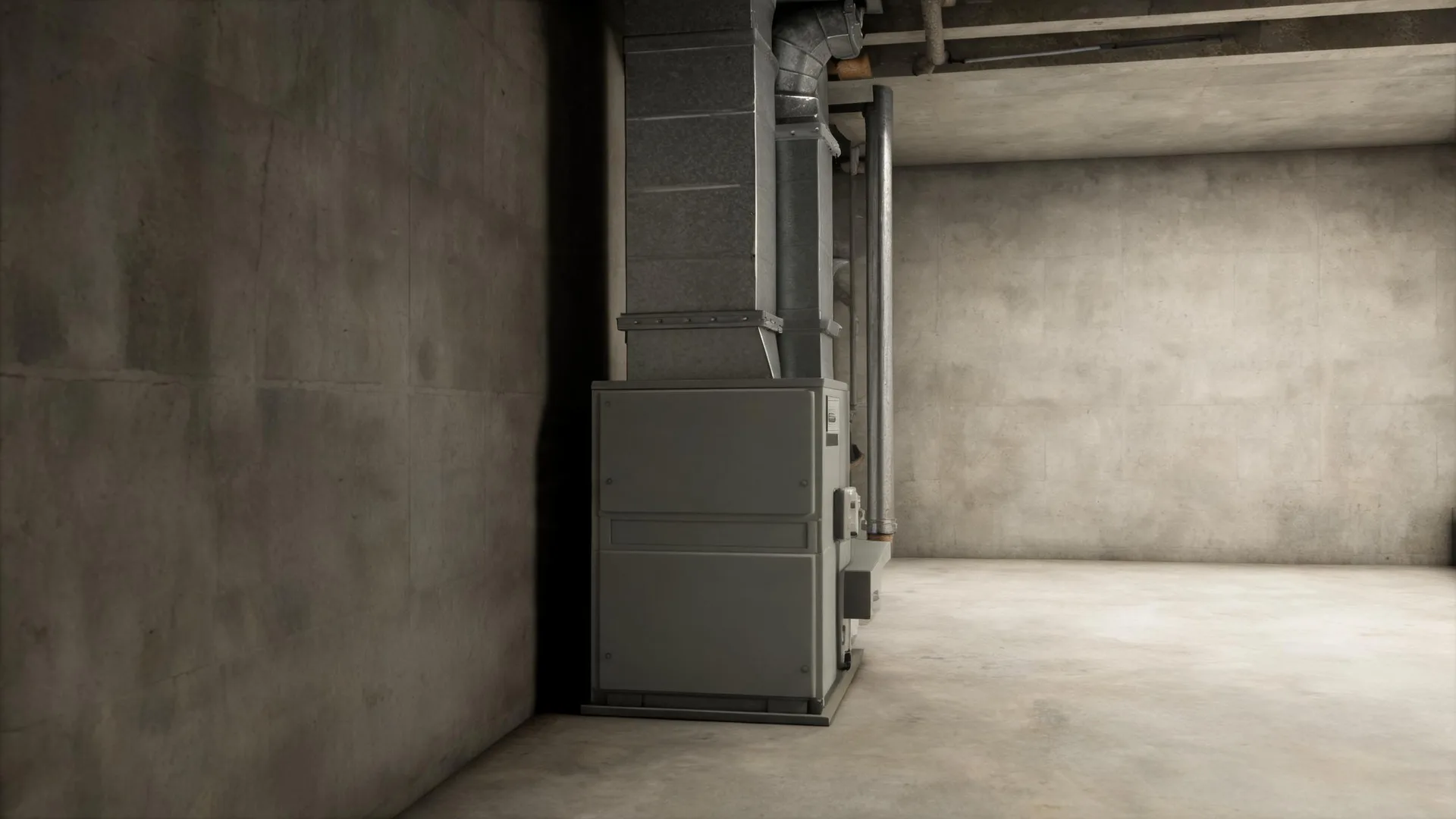
Sizing a furnace for a Laramie County home is not a task a contractor can approach with a generic rule of thumb. Homes in Laramie County, WY run heat about nine months a year, from September through May. The burner, the heat exchanger, and the ignition system cycle through nearly the full calendar, so any shortfall in the original load calculation translates directly into a unit that runs harder than it was built to. Ductwork that leaks, a heat exchanger that flexes under repeated thermal stress, an ignition component that fires daily for most of the year: these are where a poor install announces itself, and in this county it announces itself early.
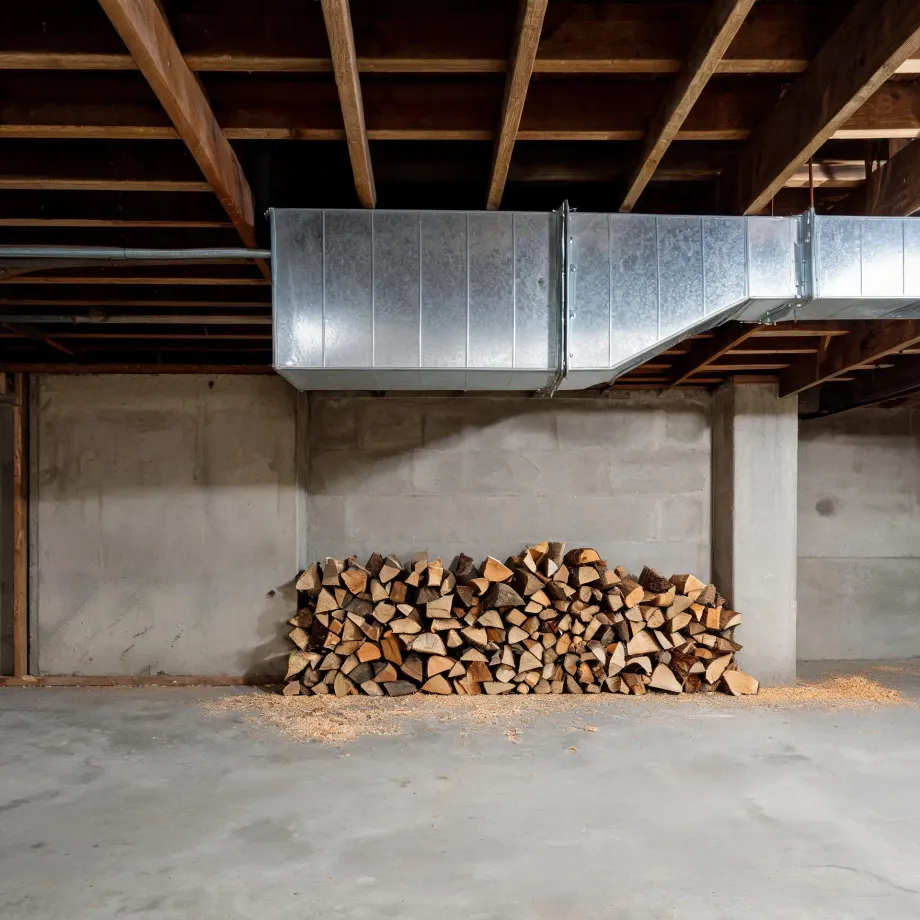
Ductwork sized for a previous generation of equipment is what a contractor has to evaluate before a furnace installation can be priced or planned. Half the homes in Laramie County, Wyoming were built in 1980 or earlier (2020-2024 ACS 5-year). That means a substantial share of the housing here was ducted around systems that are no longer in those houses, and the layout choices made then do not always suit what a high-efficiency furnace needs now. If the existing duct runs are too narrow or the trunk lines are poorly placed, the new unit cannot deliver air the way it was designed to, and the contractor has to account for that before the furnace itself is ever ordered.
What a Furnace Installation Puts in Your Home
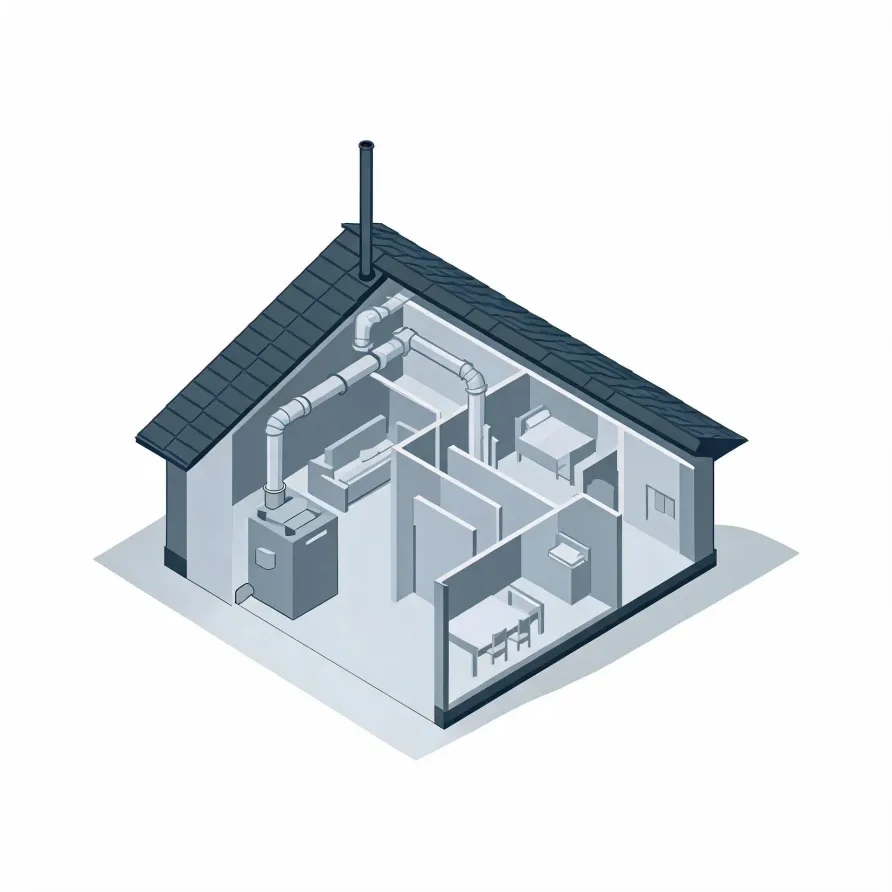
The furnace itself sits in a mechanical room, basement, or utility closet and is the unit a homeowner notices first. It holds the heat exchanger, the burner assembly, and the blower motor inside a single cabinet. A flue pipe runs from the top or back of that cabinet to the outside, carrying combustion gases out of the house.
A thermostat mounts on a wall in the living area and tells the furnace when to fire. Alongside the furnace, a contractor installs a filter housing where the return air enters the unit, and in many setups a separate air handler or evaporator coil sits directly above the furnace cabinet to serve the cooling side of the system.
The drawing shows a typical layout, and a licensed contractor determines exactly what applies to your house.
Find a contractor in Laramie CountyLaramie County by the numbers
2,637 severe weather events were recorded in Laramie County, Wyoming between 2015 and 2024.
NOAA National Centers for Environmental Information, Storm Events Database, bulk CSV export, events 2015-01-01 through 2024-12-31.Half the homes in Laramie County, Wyoming were built in 1980 or earlier (2020-2024 ACS 5-year).
U.S. Census Bureau, 2020-2024 American Community Survey 5-Year EstimatesLaramie County, Wyoming holds 45,659 housing units (2020-2024 ACS 5-year).
U.S. Census Bureau, 2020-2024 American Community Survey 5-Year EstimatesOwners occupy 70.6% of the occupied homes in Laramie County, Wyoming (2020-2024 ACS 5-year).
U.S. Census Bureau, 2020-2024 American Community Survey 5-Year EstimatesFurnace Installation Rules for Laramie County, Wyoming4 codes, standards, and laws
What the Installation Actually Looks Like
Non-weatherized gas furnaces manufactured on or after November 19, 2015 must reach 80.0 percent AFUE.
Non-weatherized oil-fired furnaces manufactured on or after November 19, 2015 must reach 83.0 percent AFUE.
Mobile home gas furnaces manufactured on or after November 19, 2015 must reach 80.0 percent AFUE.
Non-weatherized gas furnaces manufactured on or after December 18, 2028 must reach 95.0 percent AFUE, up from the 80.0 percent minimum that applies to units manufactured before that date.