Tell us about the job
Takes about a minute. No obligation.
Sizing a furnace for this house is not a guess you correct later. Homes in Carbon County, WY run heat about ten months a year, from September through June. A burner and heat exchanger that cycle through a season this long accumulate wear on the ignition system, the heat exchanger seams, and the blower bearings in ways that a unit installed loose or undersized cannot hide. A contractor quoting a replacement here has to run a proper load calculation against the actual envelope of the house, because a box that is close enough works against the installer in a county where the equipment rarely gets a rest.
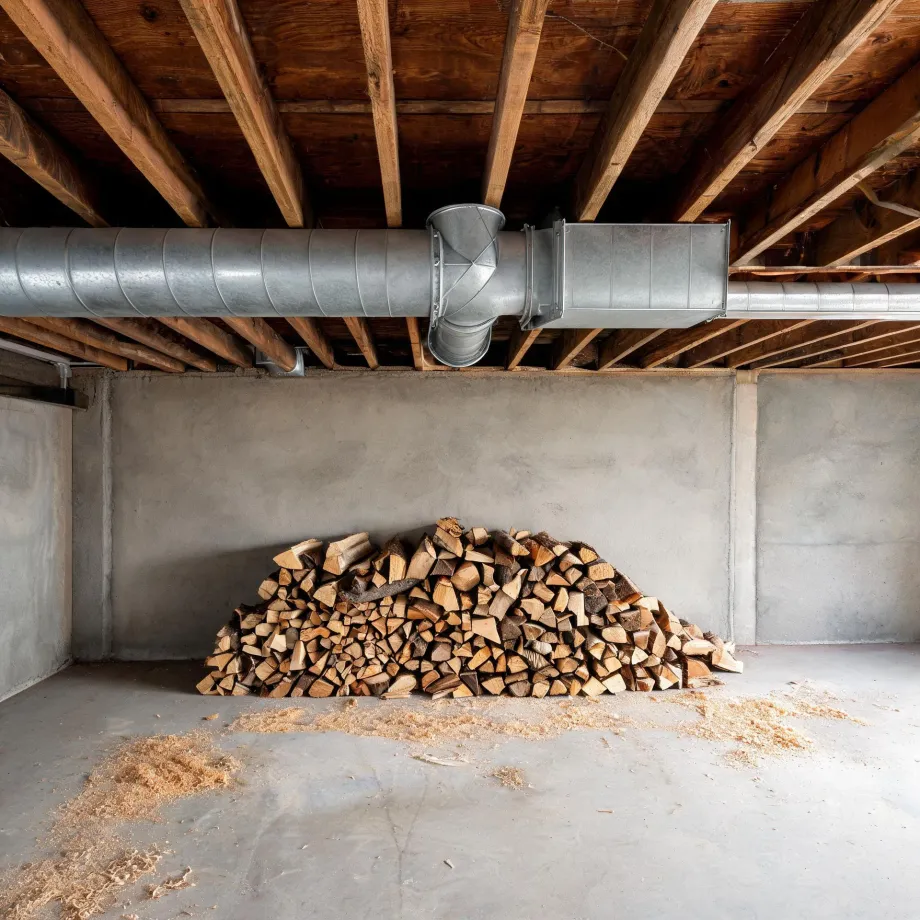
Older ductwork built around a different heating system carries a specific set of constraints: trunk sizing, branch runs, and return paths that a modern furnace does not share with what came before it. Half the homes in Carbon County, Wyoming were built in 1973 or earlier (2020-2024 ACS 5-year). That history means a contractor quoting a furnace swap here has to look at the duct system before pricing the box, because a mismatch in airflow capacity pushes heat back into the equipment and cuts its service life short. The electrical side matters too, since panel capacity for the original setup does not always stretch to cover a new unit's load requirements without a service upgrade.
What a New Furnace Installation Covers
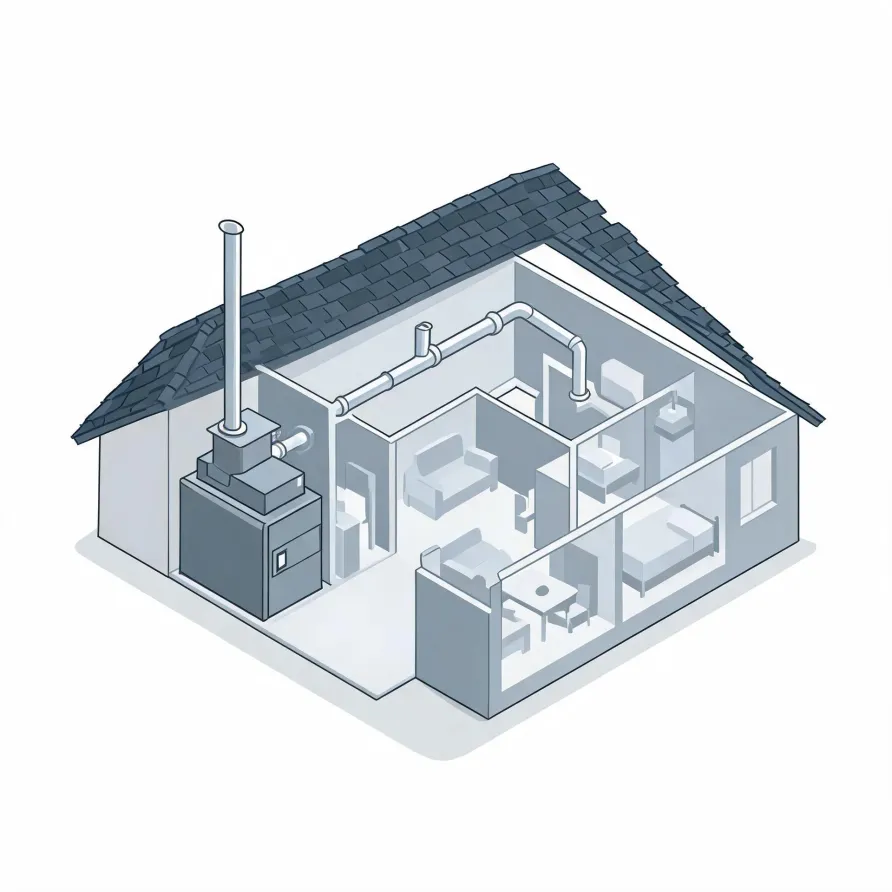
The furnace itself sits inside the house, most often in a basement, utility room, or closet. It holds the burner assembly, the heat exchanger, and the blower, and those three pieces together are what a contractor sets in place when a new unit goes in. That cabinet is the core of what you are buying.
The flue pipe runs from the furnace to an exterior wall or through the roof, carrying combustion gases out of the house. Alongside the furnace, a contractor also sets the air handler components and connects the thermostat, which mounts on an interior wall and gives you control over the whole system.
The drawing shows a typical layout, and a licensed contractor determines exactly what applies to your home.
Find a contractor in Carbon CountyCarbon County, Wyoming, by the numbers
2,347 severe weather events were recorded in Carbon County, Wyoming between 2015 and 2024.
NOAA National Centers for Environmental Information, Storm Events Database, bulk CSV export, events 2015-01-01 through 2024-12-31.Half the homes in Carbon County, Wyoming were built in 1973 or earlier (2020-2024 ACS 5-year).
U.S. Census Bureau, 2020-2024 American Community Survey 5-Year EstimatesCarbon County, Wyoming holds 8,236 housing units (2020-2024 ACS 5-year).
U.S. Census Bureau, 2020-2024 American Community Survey 5-Year EstimatesOwners occupy 76.3% of the occupied homes in Carbon County, Wyoming (2020-2024 ACS 5-year).
U.S. Census Bureau, 2020-2024 American Community Survey 5-Year EstimatesFurnace Installation Rules on the Books for Carbon County, Wyoming4 codes & standards
What Happens During a Furnace Installation in Carbon County
Non-weatherized gas furnaces manufactured on or after November 19, 2015 must reach 80.0 percent AFUE.
Non-weatherized oil-fired furnaces manufactured on or after November 19, 2015 must reach 83.0 percent AFUE.
Mobile home gas furnaces manufactured on or after November 19, 2015 must reach 80.0 percent AFUE.
Non-weatherized gas furnaces manufactured on or after December 18, 2028 must reach 95.0 percent AFUE, up from the 80.0 percent minimum that applies to units manufactured before that date.