Tell us about the job
Takes about a minute. No obligation.
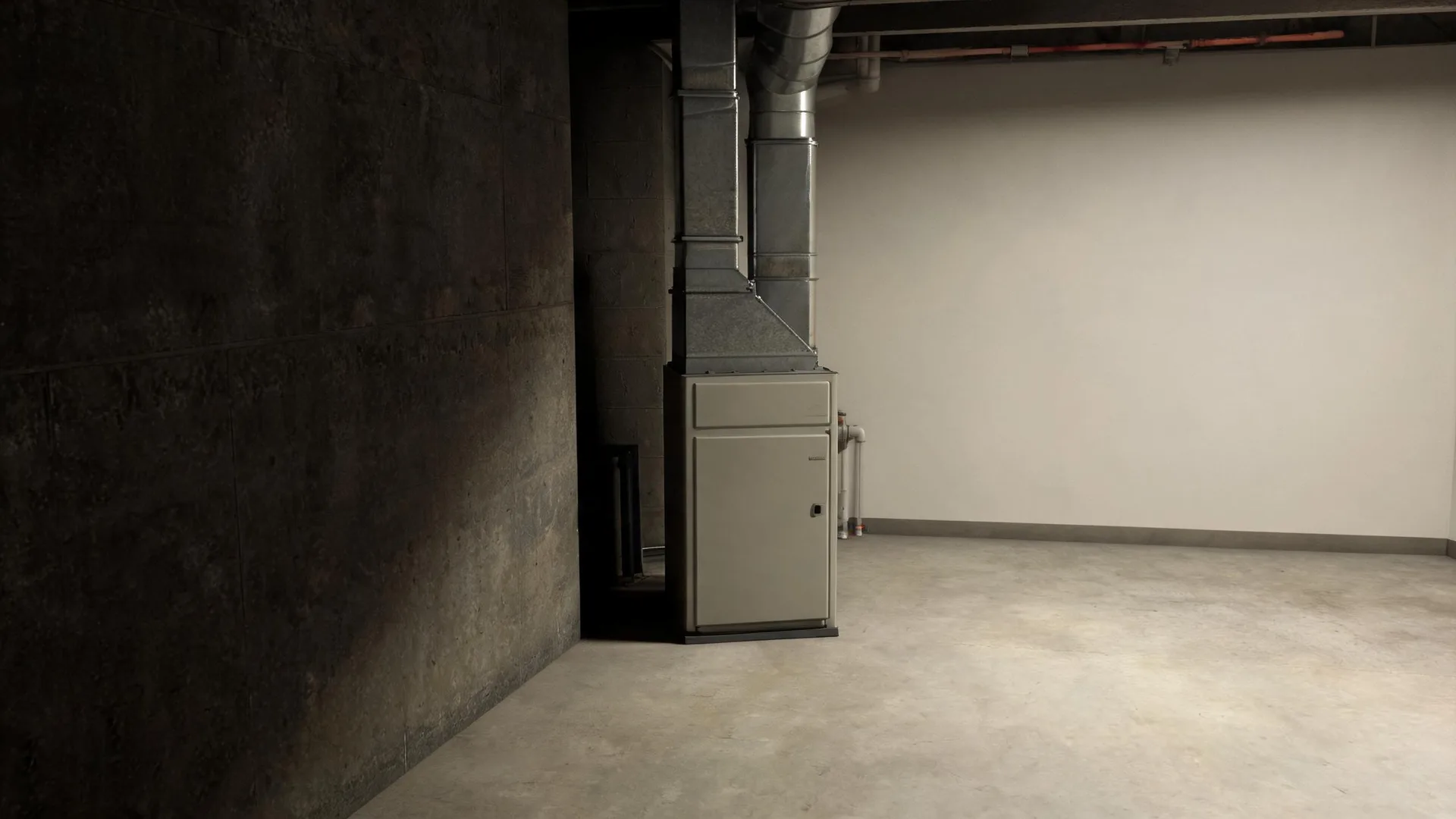
Homes in Carbon County, WY run heat about ten months a year, from September through June. The burner fires and the igniter cycles through most of the calendar year, which is where wear concentrates on a furnace. By the time a homeowner calls for a repair, the heat exchanger has logged a long run of thermal expansion and contraction, and the ignition system has accumulated far more starts than it would in a milder place. A contractor here does not treat a furnace fault as a generic diagnosis. They go to the igniter, the flame sensor, and the heat exchanger first, because that is where this season's load lands.
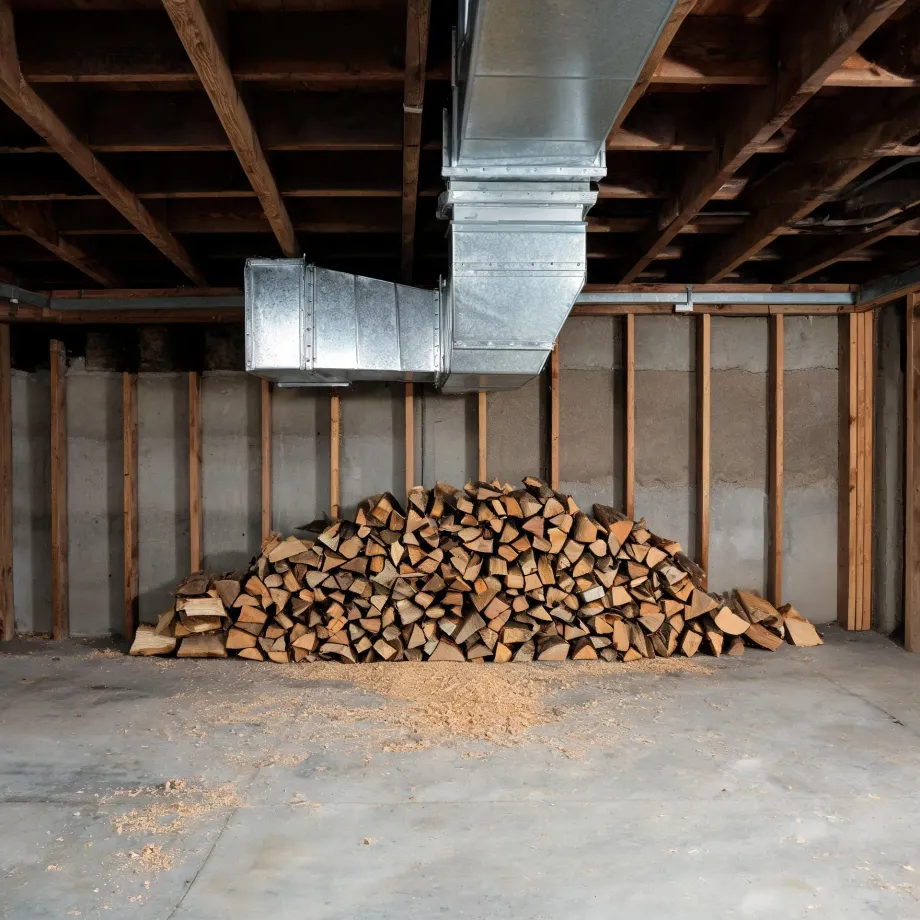
Ductwork laid down for an older furnace generation carries its own repair logic. Half the homes in Carbon County, Wyoming were built in 1973 or earlier (2020-2024 ACS 5-year). A contractor who opens a furnace in a house from that era is as likely to find a parts problem as a mechanical one, because the manufacturers who made those components have moved on, consolidated, or discontinued the line entirely. If the part is still available, the job is straightforward. If it has to be sourced from shrinking supply, that changes what the contractor quotes and how long the repair takes.
The Parts of a Furnace a Contractor Checks First
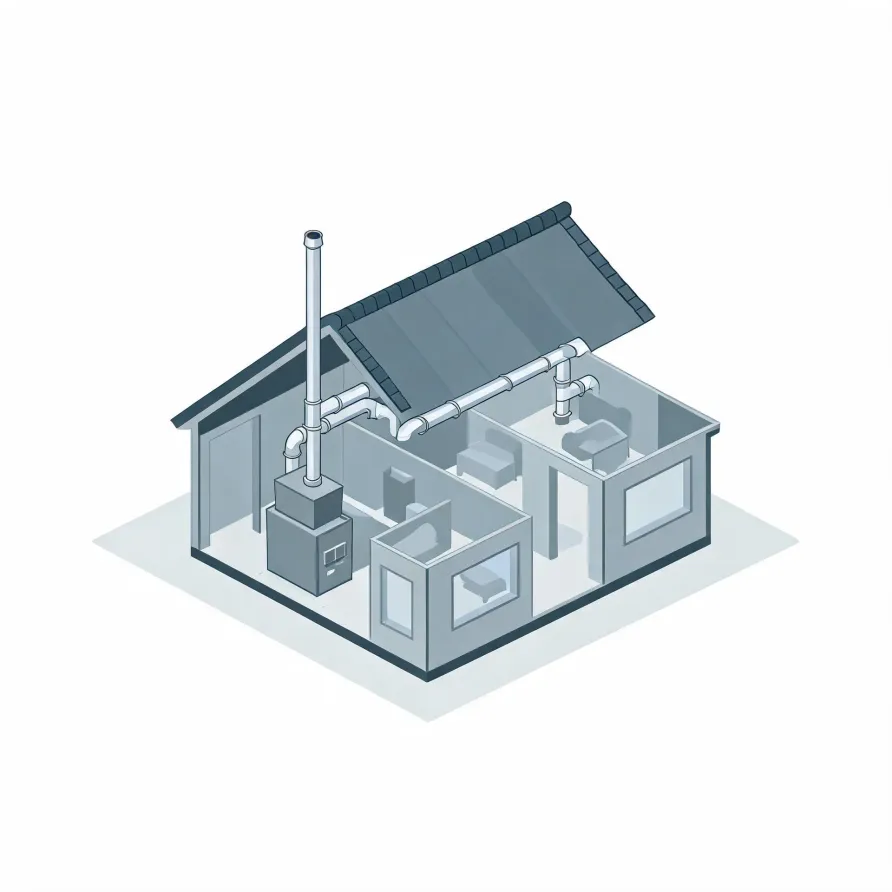
The heat exchanger sits at the core of the furnace cabinet in the basement or utility room, and it is the piece that transfers combustion heat to the air moving through your home. Cracks or failures here show up as uneven heating or, in gas units, carbon monoxide concerns. The burner assembly sits just below it, and a contractor will look there when the furnace fails to light or runs short cycles.
The blower motor sits at the base of the cabinet and pushes conditioned air into the supply side of your duct system. The control board, mounted inside the cabinet, governs every sequence the furnace runs through, and a fault there can mimic failures in other parts. The flue pipe runs from the top of the cabinet through the wall or roof and carries combustion gases out.
The drawing shows the general layout of a furnace system, and a licensed contractor determines which components apply to the specific unit and configuration in your house.
Find a contractor in Carbon CountyCarbon County, Wyoming, by the numbers
2,347 severe weather events were recorded in Carbon County, Wyoming between 2015 and 2024.
NOAA National Centers for Environmental Information, Storm Events Database, bulk CSV export, events 2015-01-01 through 2024-12-31.Half the homes in Carbon County, Wyoming were built in 1973 or earlier (2020-2024 ACS 5-year).
U.S. Census Bureau, 2020-2024 American Community Survey 5-Year EstimatesCarbon County, Wyoming holds 8,236 housing units (2020-2024 ACS 5-year).
U.S. Census Bureau, 2020-2024 American Community Survey 5-Year EstimatesOwners occupy 76.3% of the occupied homes in Carbon County, Wyoming (2020-2024 ACS 5-year).
U.S. Census Bureau, 2020-2024 American Community Survey 5-Year EstimatesCodes & Standards Covering Furnace Repair in Carbon County, Wyoming4 sourced rules and standards
What Happens When the Contractor Comes Out
Non-weatherized gas furnaces manufactured on or after November 19, 2015 must reach 80.0 percent AFUE.
Non-weatherized oil-fired furnaces manufactured on or after November 19, 2015 must reach 83.0 percent AFUE.
Mobile home gas furnaces manufactured on or after November 19, 2015 must reach 80.0 percent AFUE.
Non-weatherized gas furnaces manufactured on or after December 18, 2028 must reach 95.0 percent AFUE, up from the 80.0 percent minimum that applies to units manufactured before that date.