Tell us about the job
Takes about a minute. No obligation.
Homes in Big Horn County, WY run heat about ten months a year, from September through June. A furnace working that calendar gets its ignition system fired and its heat exchanger stressed through most of the year, and those parts show wear before anything else does. When a contractor comes out for a repair, the burner assembly and igniter get checked before the call moves further. Worn igniters and cracked heat exchangers are what a long heating season actually produces, and finding one usually explains what the homeowner called about.
Furnaces in houses this old are not running what they were built for. The original equipment was replaced at some point, and what went in took whatever the house could accommodate at the time. Half the homes in Big Horn County, Wyoming were built in 1968 or earlier (2020-2024 ACS 5-year). When a contractor opens a furnace here, the question that drives the repair bill is whether the part the system needs still has a supply chain behind it. Heat exchangers, burner assemblies, and control boards from that era of replacement equipment can be scarce, and a contractor has to establish availability before a quote means anything.
The Parts of a Furnace a Contractor Checks First
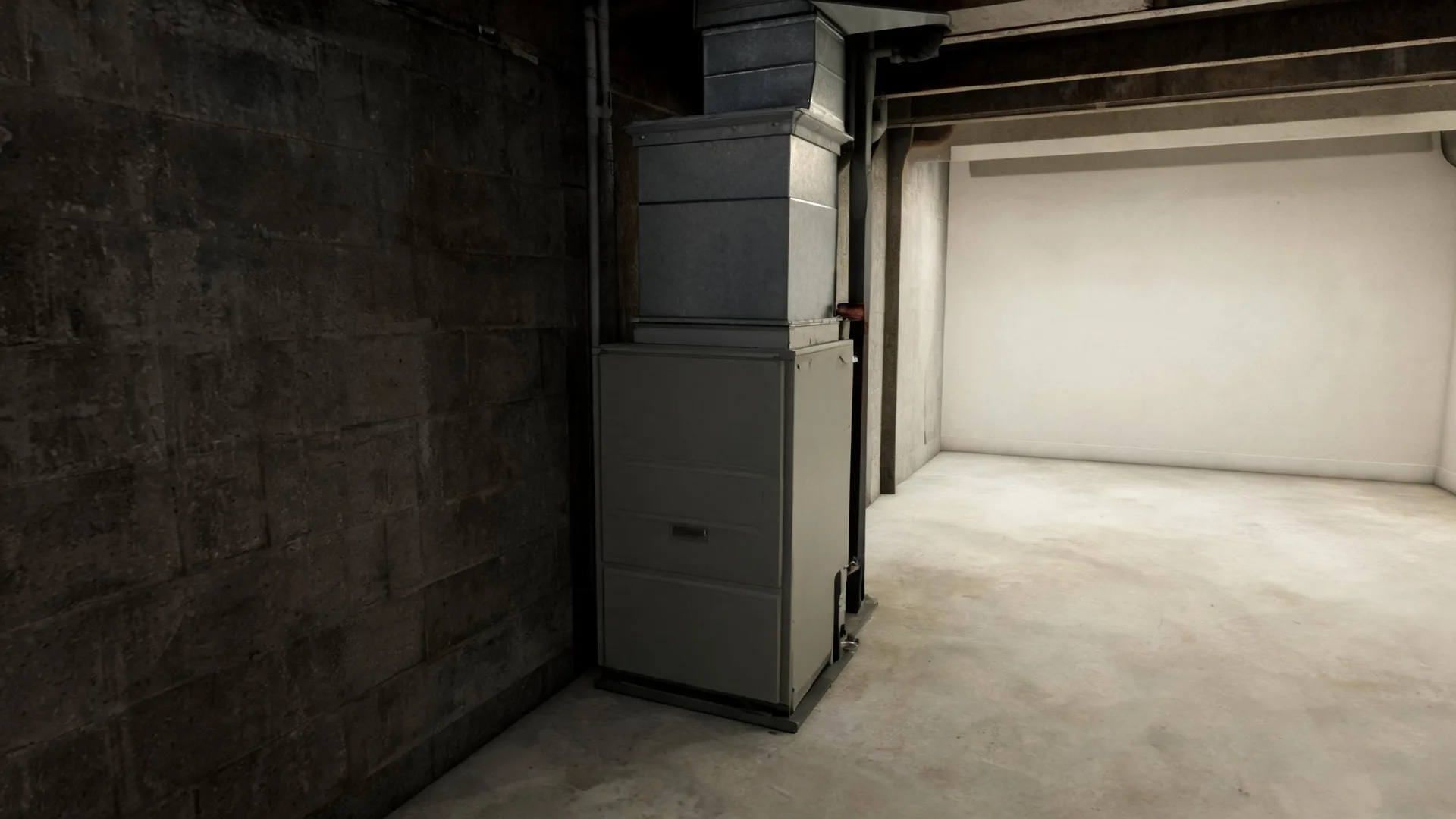
The heat exchanger sits at the core of the furnace cabinet in the basement or utility room, and it is the piece that transfers combustion heat to the air moving through the system. When it cracks, the furnace often short-cycles or throws a fault code. The burner assembly sits just below it, and a dirty or misfiring burner shows up as weak heat or a flame that will not stay lit.
The blower motor and its fan wheel push conditioned air out through the supply side of the system, and a failing motor is often the reason heat builds up inside the cabinet rather than reaching the living space. The control board and the igniter sit inside the cabinet as well, and both are common starting points when the furnace fails to start at all.
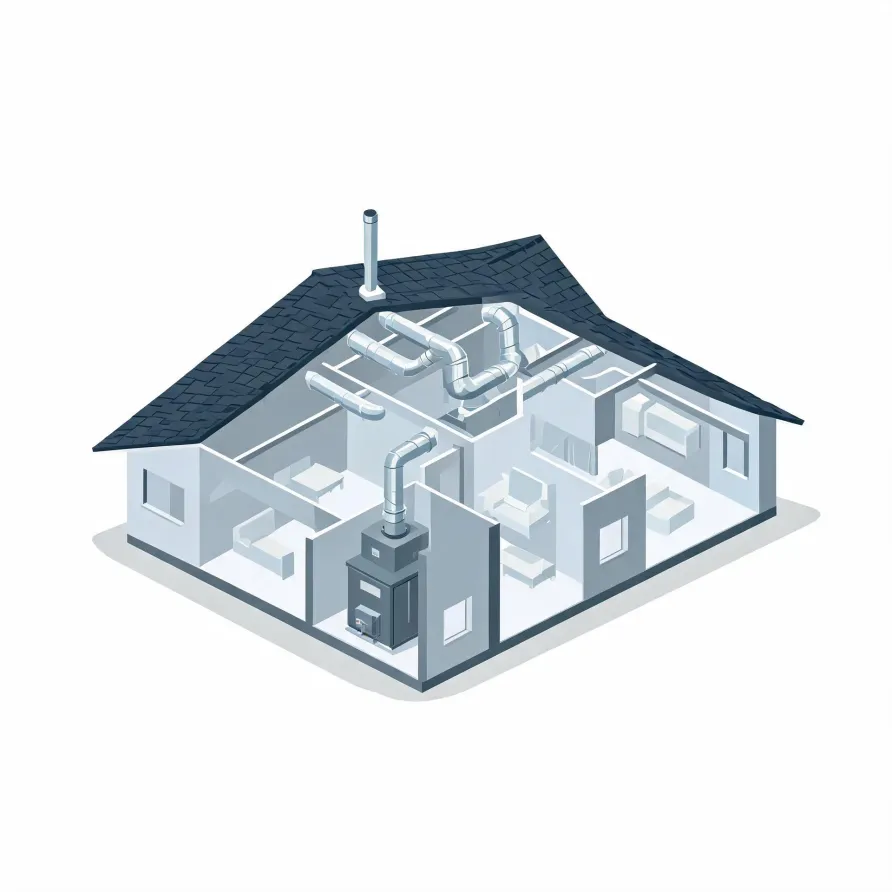
The drawing shows a typical furnace layout, and a licensed contractor determines which components apply to the specific unit and installation in your home.
Find a contractor in Big Horn CountyBig Horn County, by the numbers
97 severe weather events were recorded in Big Horn County, Wyoming between 2015 and 2024.
NOAA National Centers for Environmental Information, Storm Events Database, bulk CSV export, events 2015-01-01 through 2024-12-31.Half the homes in Big Horn County, Wyoming were built in 1968 or earlier (2020-2024 ACS 5-year).
U.S. Census Bureau, 2020-2024 American Community Survey 5-Year EstimatesBig Horn County, Wyoming holds 5,372 housing units (2020-2024 ACS 5-year).
U.S. Census Bureau, 2020-2024 American Community Survey 5-Year EstimatesOwners occupy 75.9% of the occupied homes in Big Horn County, Wyoming (2020-2024 ACS 5-year).
U.S. Census Bureau, 2020-2024 American Community Survey 5-Year EstimatesFurnace Repair Rules & Standards for Big Horn County, Wyoming4 codes, laws, and standards
What HVAC Repair Looks Like in Big Horn County
Non-weatherized gas furnaces manufactured on or after November 19, 2015 must reach 80.0 percent AFUE.
Non-weatherized oil-fired furnaces manufactured on or after November 19, 2015 must reach 83.0 percent AFUE.
Mobile home gas furnaces manufactured on or after November 19, 2015 must reach 80.0 percent AFUE.
Non-weatherized gas furnaces manufactured on or after December 18, 2028 must reach 95.0 percent AFUE, up from the 80.0 percent minimum that applies to units manufactured before that date.
Severe Weather Events in Big Horn County
Extreme weather puts real strain on furnaces, because systems that run hard through temperature swings wear faster and break more often. How much of that pressure your equipment faces is a local question, and the record below shows what Big Horn County weather has looked like in recent years.
97 severe weather events, 2015–2024. Source: NOAA National Centers for Environmental Information, Storm Events Database.